
HIPAA & PCI DSS Compliance: Protecting Healthcare and Payment Data
Protect your data and your reputation. Dive into our comprehensive guide on HIPAA and PCI DSS compliance for healthcare providers and financial institutions.
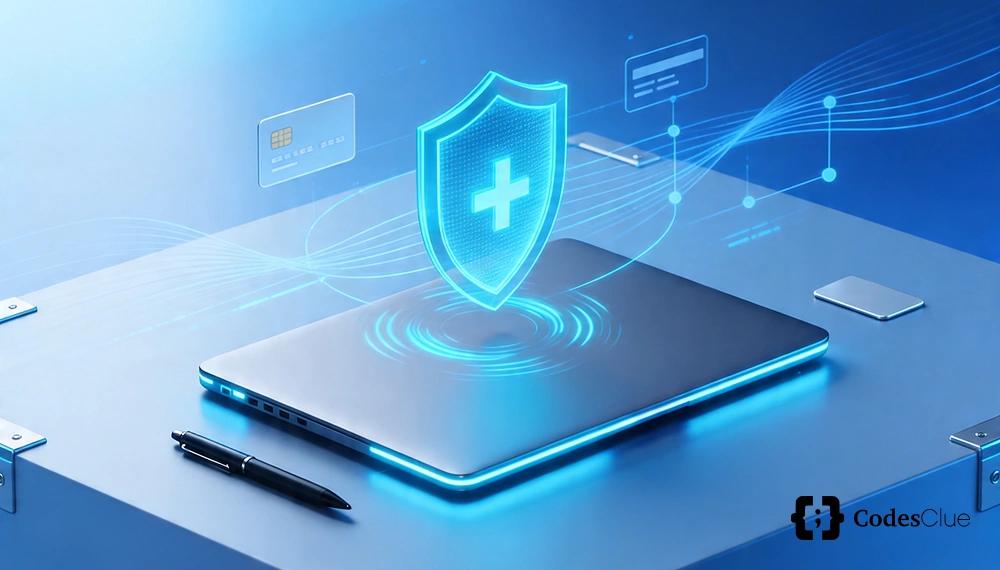
A renowned healthcare provider faced a data breach in 2025, exposing millions of patient records, and it clearly triggered the inadequate security and misconfiguration of the HIPAA security system.
This wasn’t enough. At the same time, many leading global payment platforms also reported incidents of card fraud, reinforcing the urgency of PCI DSS and the data security standard of the payment card industry.
AI is rapidly entering the core of fintech and healthcare systems, and now, it has become difficult for enterprises to comply with HIPAA and other payment security provisions. The reason being the absence of strong, AI-driven compliance frameworks, which is even leading the digital platforms to remain vulnerable to costly regulatory penalties and data breaches.
Let’s check out in this blog how modern enterprises can bridge these compliance gaps with smarter security strategies and AI-driven frameworks.
Why is Non-Compliance Costly?
Weak configurations, human error, and evolving cyber threats are no longer rare; they, in fact, expose this gap to the attackers to exploit. According to IBM, the average cost of a data breach has crossed $4.45 million in 2023, with healthcare as the most affected sector.
Hence, the organizations which are handling sensitive data are bound to follow HIPAA rules and may get penalized for up to $1.5 million per year for a security breach. Also, non-compliance with PCI DSS can result in increased transaction fees, heavy penalties, and even loss of card processing rights.
Beyond the financial loss, businesses would also have to suffer from legal liabilities, customer trust erosion, and operational disruptions at their end. Today, compliance is not just about avoiding fines, but about ensuring the continuity of their business.
Understanding the HIPAA Security Rule in Practice
Imagine if any leading SaaS platform in the healthcare sector stores patient records without access controls and proper encryption. Their single misconfiguration could bring them to risk of thousands of ePHI records, which implies exactly what the HIPAA security rule is created to resolve.
Here, the rule focuses on safeguarding Electronic Protected Health Information (ePHI) utilizing three key pillars:
1. Administrative Safeguards
- Risk analysis and management: Regular risk assessment, such as identifying unsecured cloud storage and implementing mitigation plans for preventing ePHI exposure.
- Employee training and access policies: Train personnel on data handling to minimize internal breaches. For example, restricting access of the nurses to relevant patient records.
2. Physical Safeguards
- Secure data centers and device controls: Provide surveillance and device tracking by monitoring access to on-site servers storing patient data. This helps protect the infrastructure.
- Restricted physical access: Biometric access to server rooms in hospitals to limit entry of authorized personnel only.
3. Technical Safeguards
- Encryption and secure transmission: Ensure data encryption during storage and transfer using SSL/TLS for transmitting patient records.
- Access controls and audit logs: Track and control system access by logging every login attempt to detect unauthorized access.
Organizations that have achieved HIPAA compliance do not just implement compliance, but they also continuously monitor and improve it.
PCI DSS: Lessons from Payment Data Breaches
Consider a situation where an e-commerce platform stores card data without proper encryption. A single breach can expose the financial details of thousands of customers, leading to fraudulent transactions, chargebacks, and legal consequences.
Hence, PCI DSS plays a significant role at this stage. The entity defines strict requirements for protecting the data of the cardholder.
Key PCI DSS Requirements
- Secure network and systems
- Protect cardholder data
- Maintain vulnerability management programs
- Implement strong access controls
- Monitor and test networks
- Maintain an information security policy
Failure to comply with the above-stated requirements could lead the firms to face financial penalties, brand reputation damage, and suspension of payment processing.
What is the Difference Between HIPAA and PCI DSS?
As both of these frameworks focus on data security, they still have some differences in their scope and applicability.
| Aspect | HIPAA | PCI DSS |
|---|---|---|
| Data Type | ePHI | Cardholder Data |
| Industry | Healthcare | Payment/Finance |
| Objective | Patient Privacy | Payment Security |
| Enforcement | Government Regulation | Industry Standard |
For example:
- A telehealth platform must follow HIPAA Compliance
- A payment gateway must comply with PCI DSS
Some businesses, like healthcare apps with payment features, must comply with both.
Where Businesses Commonly Fail?
Real-world breaches often originate from simple to critical mistakes, where a bit of oversight, for example, a weak password or a missed configuration, may lead you to major cyberattacks.
In many cases, even the basic security gaps give opportunity to the attackers to access sensitive healthcare and payment data, instead of advanced hacking.
- Misconfigured cloud storage is exposing sensitive data
- Weak or reused passwords
- Lack of encryption for stored or transmitted data
- No real-time monitoring or alerts
According to Verizon’s DBIR report, over 70% of breaches are caused by human error or misconfigurations. These breaches are gaps, clearly highlighting the issue that compliance should be treated as a continuous process and not just a one-time task.
After all, “Monitoring matters to eradicate problems and to make you improve.”
The Role of AI in Modern Compliance
Today, threats are constantly becoming sophisticated, and the conventional security methods are falling short. So, now is the perfect time for AI to play a significant role in strengthening the compliance frameworks.
Far from a rule-based system, AI keeps on learning from continuous attacking patterns, faster threat detection, and enabling smart solutions to come forward.
This brought the organizations to recognize a shift from reactive security to proactive compliance for identifying the risks and mitigating them before they escalate.
How AI Helps?
- Detects anomalies in real-time, like abnormal login patterns, and prevents potential breaches before escalation.
- Automates compliance audits using AI tools that continuously scan systems for compliance gaps, reducing dependency on manual and periodic audits.
- Predicts potential vulnerabilities through machine learning models analyzing past incidents to forecast risks and proactively address weak points.
- Enhances threat response time to accelerate incident response by automatically triggering alerts and mitigation workflows within seconds using AI tools.
Artificial Intelligence can help organizations to manage HIPAA Security Rule and PCI DSS requirements by performing:
- Faster risk detection
- Reduced manual effort
- Improved accuracy in compliance monitoring
AI should not be taken as an option, but as a core component of modern data security strategies.
Best Practices to Achieve Compliance Efficiently
Enterprises achieve success in compliance by following a proactive, structured, and continuously evolving approach, such as:
1. Conduct Regular Security Audits
They identify vulnerabilities before the attackers by accomplishing regular audits in the form of quarterly risk assessments that help them in uncovering hidden security gaps and misconfigurations before they are exploited.
2. Implement Strong Encryption
They protect data at rest and in transit by encrypting it using advanced standards such as AES-256 and TLS. This ensures that the data remains secure even if it is unlawfully accessed or intercepted.
3. Enforce Role-Based Access Control (RBAC)
They can limit data access to authorized personnel or job roles only to reduce the possibility of insider threats and data exposure. For example, doctors can access only relevant patient data.
4. Monitor Systems Continuously
They can use AI tools for real-time threat detection because continuous monitoring facilitates instant detection of anomalies, minimizes the response time, and prevents potential damage.
5. Train Employees Regularly
They train employees through ongoing training programs like phishing simulations to reduce human errors. This keeps the employees aware of the possible cyber threats and compliance protocols.
6. Maintain Documentation
They ensure audit readiness at all times by maintaining documentation of policies, procedures, and incident logs, and regulatory reporting is essential to make peace with the compliance requirements.
Compliance ensures you get a resilient and security-first culture for your employees and customers, and not about ticking boxes.
The Future of Compliance: AI, Automation, and Zero Trust
HIPAA compliance and PCI DSS are two essential norms that ensure intelligence, automation, and adaptive security of the corporate systems. Some of the emerging trends these two security measures bring forward include:
- AI-driven compliance monitoring followed by continuous and automated tracking of the compliance status of organizations across systems with minimal human intervention.
- Zero trust security models, here you should always go with a “Never trust, always verify” approach. This ensures that every user and device is continuously authenticated.
- Continuous authentication covers the real-time identity verification of the entities involved based on behavior, location, and access patterns.
- Real-time risk assessment is actually the dynamic evaluation of threats using AI to prioritize and mitigate risks instantly.
With the constantly evolving regulations, laws, and day-by-day getting more complex threats, businesses are required to adopt proactive, intelligence-driven security strategies for reactive compliance. This lets compliance become a competitive advantage rather than a constraint.
Conclusion: Compliance is a Business Imperative
Real-world incidents always prove that data breaches cannot come along with any ‘ifs’, but ‘whens’. Organizations that do not follow the guidelines according to the HIPAA security rule and PCI DSS may face more risk than penalties. Their reputation, customer trust, and long-term viability – all remain at risk.
But due to AI and a data-driven digital ecosystem, compliance has become more than a regulatory requirement. Today, it has become a critical foundation for sustainable growth and security.
FAQs on HIPAA & PCI DSS Compliance
What is the HIPAA Security Rule, and why is it important?
The HIPAA security rule sets standards to protect electronic protected health information (ePHI) through administrative, physical, and technical safeguards. It is crucial for preventing data breaches and ensuring patient privacy.
What is PCI DSS, and who needs to comply with it?
PCI DSS (Payment Card Industry Data Security Standard) applies to any organization that processes, stores, or transmits cardholder data. It helps prevent payment fraud and ensures secure financial transactions.
Can a business be required to comply with both HIPAA and PCI DSS?
Yes, organizations like healthcare apps with payment features must follow both HIPAA compliance and payment card industry data security standards to protect patient and payment data simultaneously.
What are the common causes of compliance failures?
Most failures occur due to misconfigured systems, weak passwords, a lack of encryption, and the absence of continuous monitoring. Human error remains a leading factor in security breaches.
How does AI help in achieving compliance?
AI enhances compliance by detecting threats in real-time, automating audits, predicting vulnerabilities, and improving response times. It enables organizations to move from reactive to proactive security.
What are the best practices for maintaining HIPAA and PCI DSS compliance?
Regular audits, strong encryption, role-based access control, continuous monitoring, employee training, and proper documentation are key to maintaining effective and ongoing compliance.