



Therapix.AI
AI clinical documentation that turns therapy sessions into structured notes and SOAP reports.
62% reduction in documentation time
- React.js
- Node.js
- PostgreSQL
- +3 more
Designed and built by CodesClue
Mission-critical push-to-talk for stadiums, arenas and emergency services.
CodesClue built Nexus PTT, a mission-critical push-to-talk platform for stadiums, arenas, and emergency services. Delivered end-to-end native iOS & Android apps, Node.js backend, BLE & RF hardware integration, and App Store deployment.
CodesClue delivered a complete IoT hardware companion app platform for a US-based client operating in the sports and live events sector. The system powers push-to-talk (PTT) communication for mission-critical environments including stadiums, arenas, campus security, and emergency service teams.
From MVP through scaled production, we owned end-to-end delivery spanning native iOS and Android companion apps, a Node.js backend, hardware device integration over BLE and a proprietary wireless protocol, and full App Store / Play Store deployment with ongoing post-release support.
The platform was engineered for reliability in dense RF environments, with encrypted communication channels, token-based hardware authentication, and multi-tenant operator isolation baked in from the ground up.

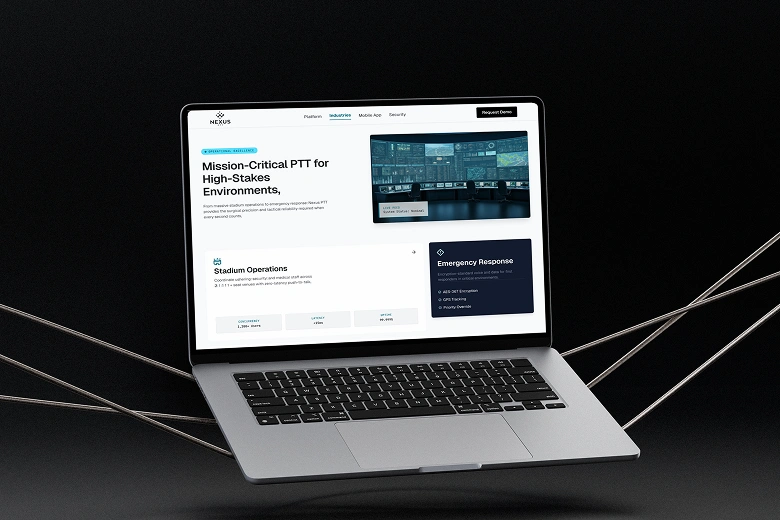
We designed every layer of the platform with one goal: zero-compromise communication when it matters most, inside a packed stadium, during an emergency response, or across a campus security operation.
Close collaboration with the firmware team ensured the companion apps and the proprietary wireless waveform device operated in tight coordination. This hardware-first approach minimized latency in dense RF environments and ensured stable communication where off-the-shelf solutions would fail.
Encrypted communication channels and token-based device authentication with expiry and rotation policies were architectural pillars from day one not afterthoughts. The security model was designed to meet emergency services compliance requirements from the ground up, with no shortcuts taken at any layer.
Separate Swift (iOS) and Kotlin/Java (Android) apps were built natively to maximize BLE reliability and platform integration fidelity. Rather than sharing a cross-platform codebase, we invested in native quality on both platforms, backed by extensive Android OEM compatibility testing before every production release.
The Node.js backend used versioned data schemas and isolated operator namespaces with role-based access control, allowing the platform to scale across multiple independent organizations stadiums, arenas, and emergency services without data leakage or structural rework as new clients were onboarded.
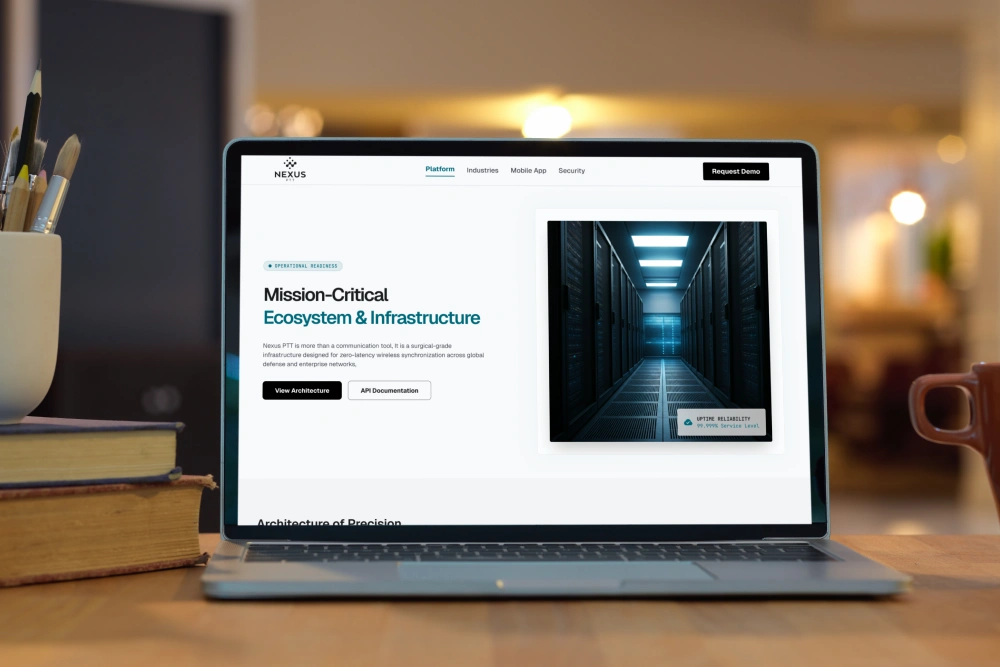
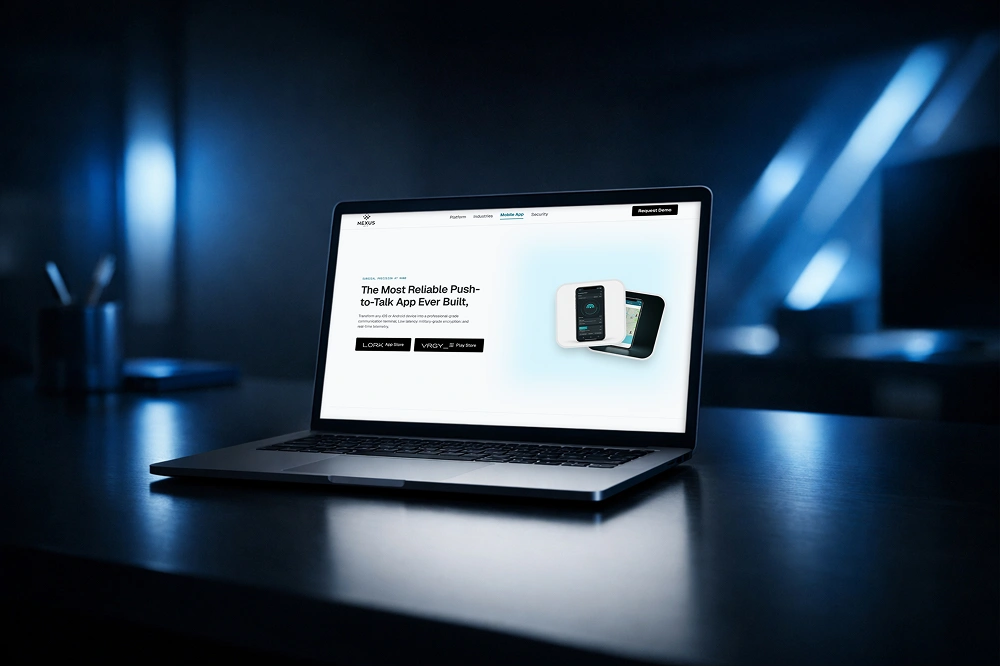
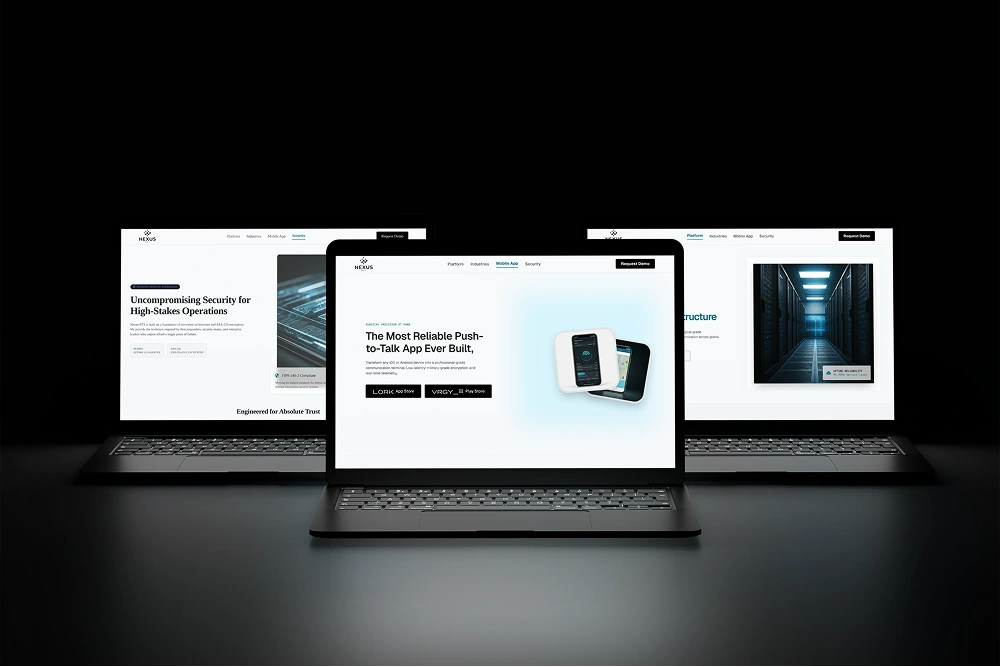
Push-to-talk inside a packed stadium leaves no room for dropped audio, failed pairing or a release that stalls in review. Four problems shaped the build.
Challenge
Achieving consistent low-latency push-to-talk communication inside packed stadium environments required deep coordination between the firmware layer and the mobile companion apps. Competing signals in high-density RF scenarios introduced interference that standard BLE and wireless implementations were not equipped to handle reliably.
Solution
Regular cross-team syncs between CodesClue's mobile engineers and the client's firmware team enabled protocol-level optimizations that significantly reduced latency and improved signal stability in high-density RF scenarios. Treating the app and firmware as a single system rather than separate concerns was the key to achieving reliable PTT performance in demanding environments.
Challenge
Reliable BLE pairing across the wide range of Android manufacturers encountered in real-world stadium and emergency service deployments required far more than standard implementation. Device-specific quirks in connection handling surfaced across OEMs, making a stable production release dependent on comprehensive compatibility testing before sign-off.
Solution
A structured Android compatibility matrix was established covering major OEM variants encountered in real-world deployments. BLE connection handling was hardened with device-specific retry logic and targeted workarounds, ensuring a consistent pairing experience across the Android ecosystem before any production release was signed off.
Challenge
Hardware-paired applications face elevated scrutiny during App Store review. Unplanned review lead times impacted the initial release schedule and created friction between mobile release cadence and backend deployment timelines, requiring a structural rethink of how future releases were planned.
Solution
App Store review time was incorporated as a standard buffer in all subsequent release plans. A staged rollout strategy was adopted to decouple backend deployments from mobile release cadence, giving the team predictable, controllable release windows and eliminating the scheduling disruption caused by variable review timelines.Designed the platform to be flexible, allowing quick adaptation to changing legal requirements across different regions.
Challenge
Supporting independent operator accounts across stadiums, arenas, and emergency services, each with their own users, roles, and data while maintaining strict isolation at the application layer was a core architectural challenge. Any leakage or misconfiguration between tenants was unacceptable in a mission-critical environment.
Solution
Isolated data namespaces per operator were enforced at the API layer with role-based access control, ensuring complete separation between tenants regardless of scale. Versioned schemas enabled non-breaking evolution as new operator accounts and features were onboarded, keeping the platform stable and extensible without disruptive migrations.
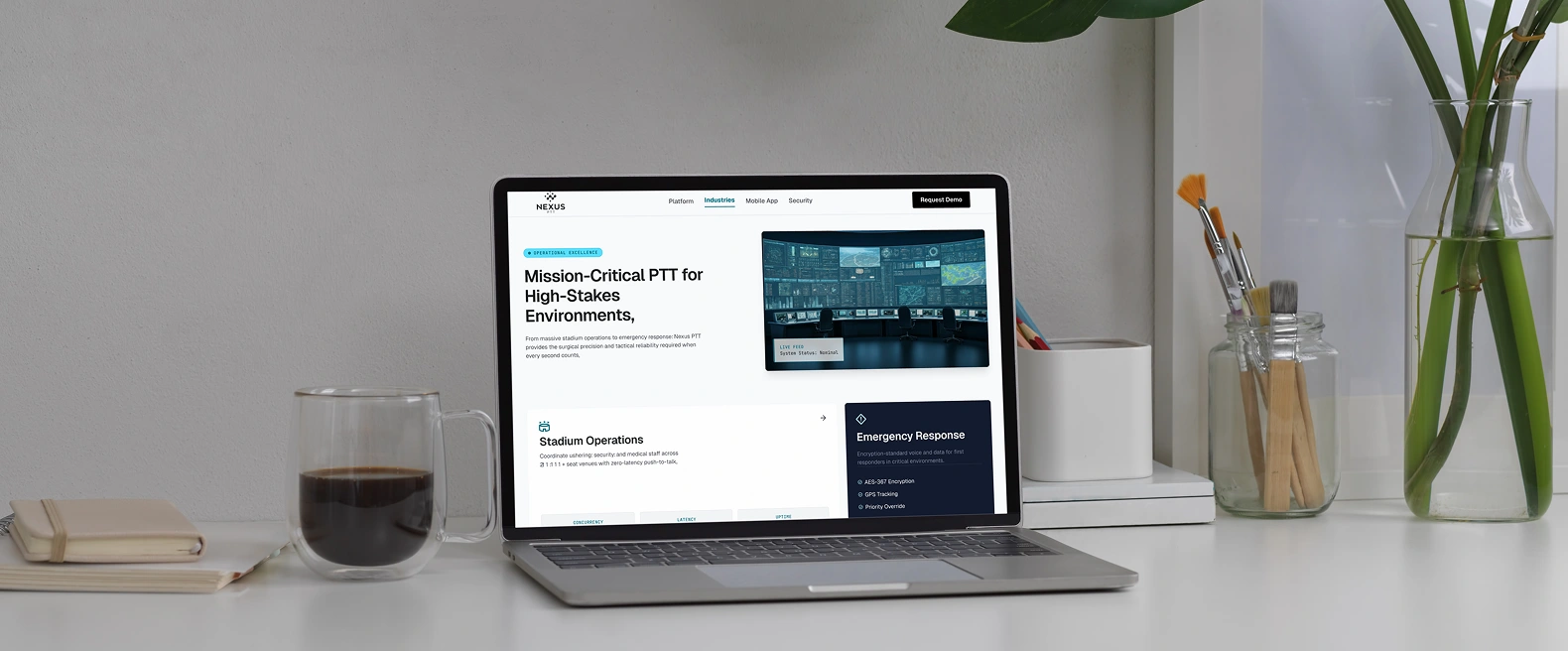
Nexus PTT follows a layered communication architecture designed for zero-compromise reliability from the hardware up to the operator dashboard.
Deployment begins with hardware pairing field devices connected to the companion app over BLE and authenticated via token-based handshake with the backend, establishing a secure, verified communication channel before any PTT session begins.
Once paired, operators initiate push-to-talk sessions over the proprietary wireless protocol, with the companion app handling RF coordination in real time. The platform manages session routing, channel encryption, and role-based access simultaneously, ensuring only authorized users communicate on authorized channels.
On the backend, the Node.js API processes session telemetry and operational analytics continuously, giving administrators live visibility into device status, session activity, and system health. Each operator's data remains isolated within its own namespace, with RBAC enforced at every API call.
Administrators manage users, roles, devices, and channels through the operator dashboard, onboarding new team members, rotating authentication tokens, and reviewing session logs all within a multi-tenant architecture that keeps each organization's data completely separate from others on the platform.
Related services
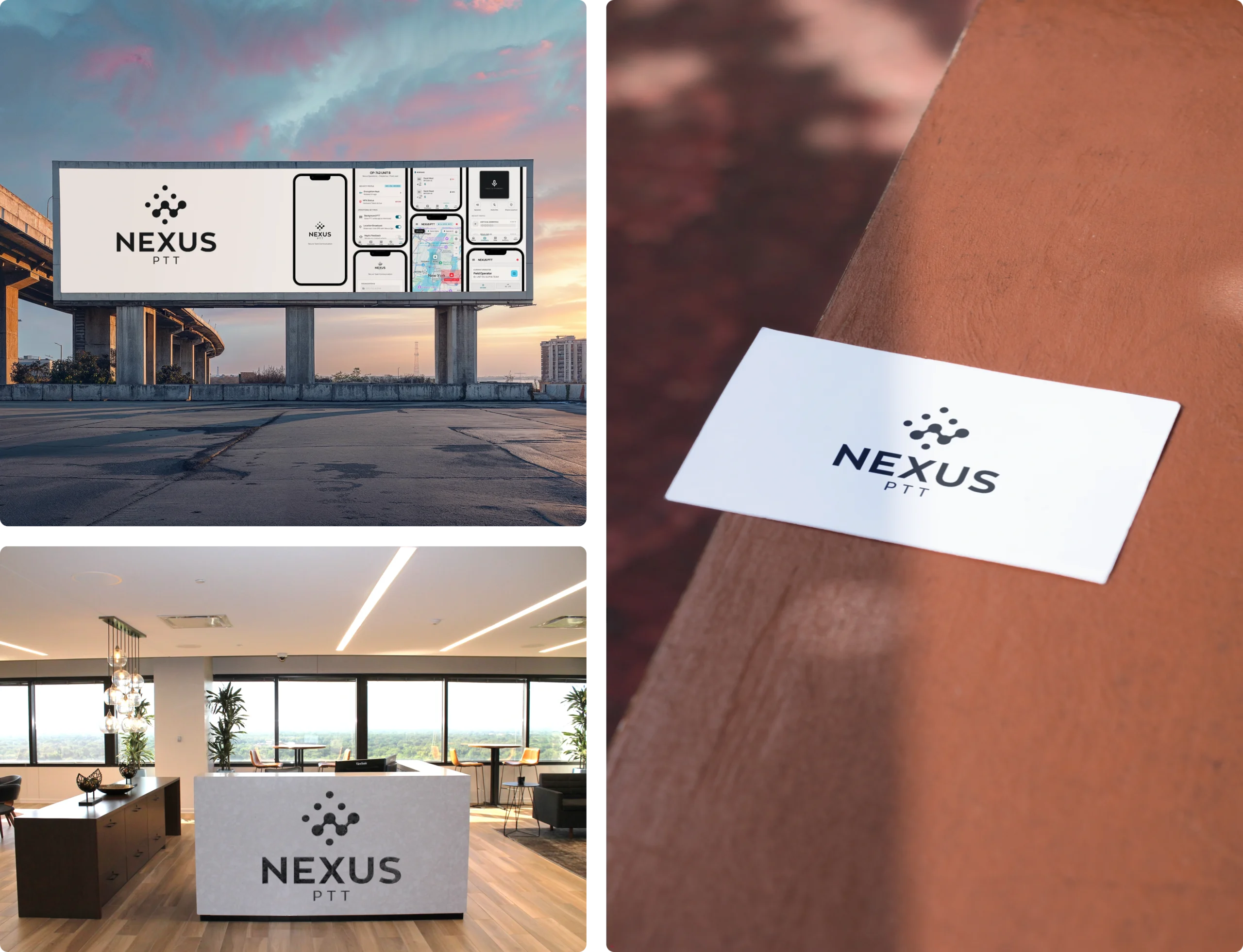
The design behind it
Designing communication without unnecessary complexity.
See the designTell us what you are building. An engineer replies within one business day, and we sign an NDA before any engagement.
Next project
A pantry app that tracks what a household has, warns before food expires, builds the shopping list and suggests recipes from what is already in the cupboard.
AI clinical documentation that turns therapy sessions into structured notes and SOAP reports.
62% reduction in documentation time

A mobile app for gate and security staff: scan a visitor's Emirates ID, check them in, and check them out against the right employee and vendor.
A digital payments platform with real-time transaction tracking and reconciliation.