


Mobile apps are no longer a “nice to have” for enterprises. Healthcare providers, retailers, banks, logistics companies, and on-demand platforms now run core operations through mobile, and React Native is the framework powering a growing share of them.
Here’s why: React Native lets you build high-performing apps for both iOS and Android from a single codebase. You ship faster, spend less on maintenance, and still deliver a native-quality experience. That’s a hard combination to beat.
This Blog breaks down how React Native works across five major industries, the use cases that matter, the features you need, and real-world examples to learn from.
Why Industry Teams Choose React Native?
Speed and cost drive most conversations about cross-platform development, but React Native delivers on both without forcing you to compromise on quality.
With a shared codebase across iOS and Android, your team ships faster, releases updates in sync, and avoids duplicating effort. You also tap into a massive JavaScript developer ecosystem, which makes hiring easier and onboarding faster.
React Native development also gives you direct access to native device features: camera, GPS, biometrics, Bluetooth, push notifications, NFC, and sensors. That matters the moment you start building anything beyond a basic CRUD app.
React Native vs Flutter: which wins for industry apps?
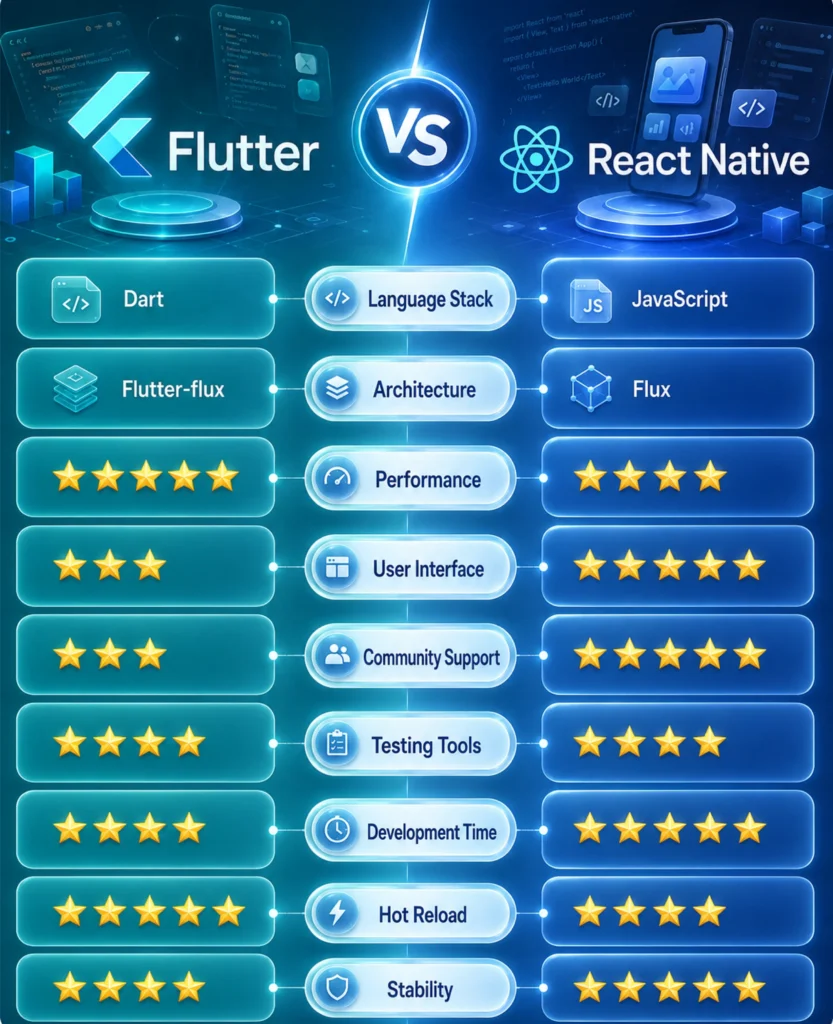
Both frameworks handle cross-platform well. But React Native holds an edge for enterprises already running JavaScript stacks. It integrates cleanly, requires less context-switching for developers, and has a deeper library ecosystem. Flutter has strengths too, but if your team lives in JS/TypeScript, React Native is the faster path.
React Native for Healthcare:
Healthcare organizations use React Native to build patient-facing tools and internal clinical workflows, often at the same time.
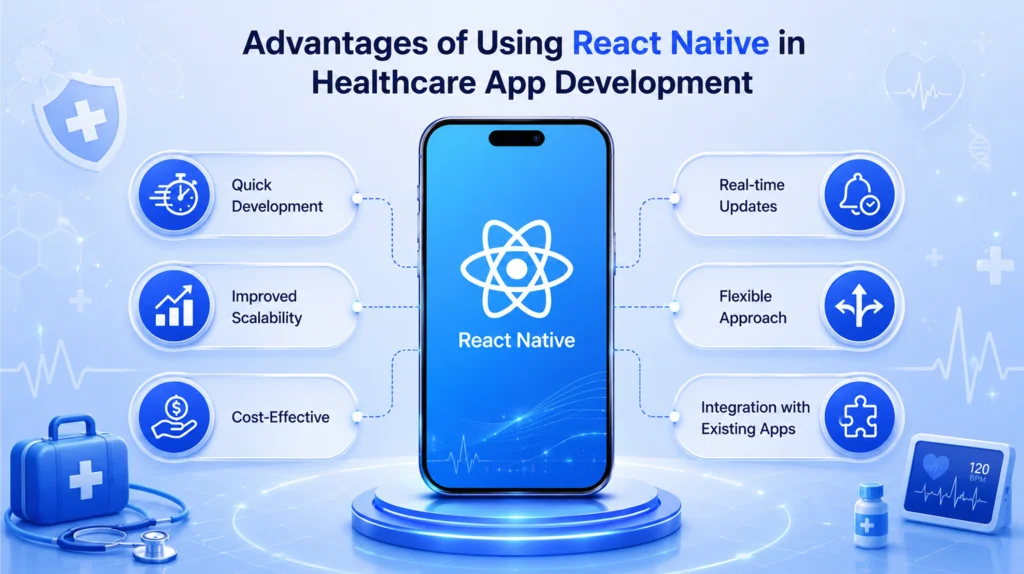
What teams are building:
- Telemedicine platforms with video consultations
- Patient portals and appointment scheduling
- Medication reminders and adherence tracking
- Remote patient monitoring dashboards
- Wellness and fitness apps
Features you can’t skip:
Your healthcare app needs HIPAA-compliant architecture from day one, not bolted on later. Beyond compliance, build in EHR integration, secure messaging, multi-factor authentication, and push notifications. Video consultation is increasingly expected, not optional.
Backend stack that works:
Node.js or NestJS on the backend, PostgreSQL or AWS HealthLake for data, and FHIR APIs for health record exchange. Firebase works well for real-time notifications and lightweight data sync.
React Native for eCommerce:
Mobile commerce is where revenue happens now. If your shopping experience isn’t fast and smooth on mobile, you’re losing customers to competitors who built better apps.
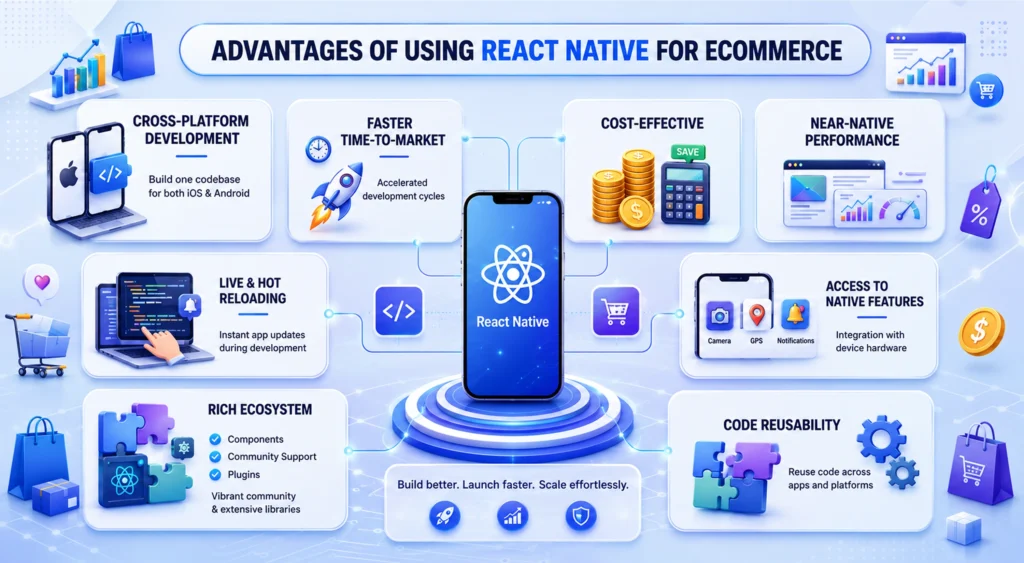
What teams are building:
- Direct-to-consumer storefronts
- Multi-vendor marketplaces
- B2B ordering platforms
- Subscription commerce apps
Features that drive conversions:
Built in fast product search, smart filtering, secure checkout, wishlist functionality, and order tracking. Add push notifications for promotions and back-in-stock alerts. Loyalty programs and personalized recommendations lift retention. AR-based product visualization is gaining ground fast in fashion, furniture, and home goods.
Performance matters at scale:
Large product catalogs will expose weak architecture quickly. Use lazy loading, pagination, image compression, CDN integration, and smart caching to keep your app fast as inventory grows.
Shopify and Walmart have both used React Native to accelerate their mobile development, and the results show in their app performance.
React Native for FinTech
Financial apps face the highest bar: security, compliance, performance, and trust, all at once. React Native handles it when you build the architecture right.
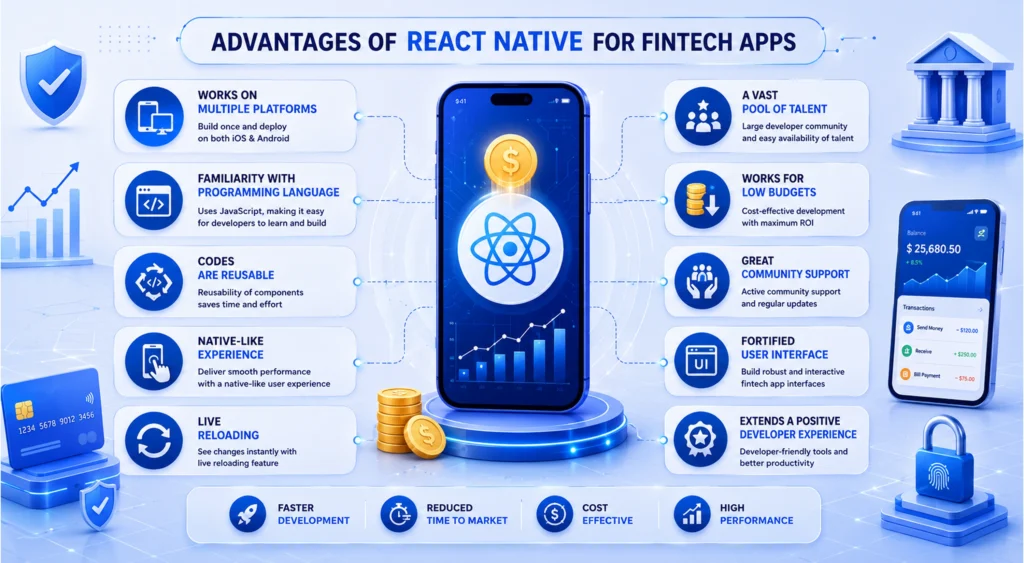
What teams are building:
- Mobile banking apps
- Digital wallets
- Trading platforms
- Lending and credit apps
- Insurance platforms
Features that can’t be compromised:
Biometric authentication, KYC verification, real-time transaction alerts, PCI-DSS compliance, fraud detection, and secure document uploads. Every layer of your stack needs encryption and monitoring.
Is React Native safe enough for fintech?
Yes, when you pair it with the right security infrastructure: encrypted APIs, OAuth, secure token storage, multi-factor authentication, and continuous monitoring. The framework itself isn’t the risk; your architecture is. Many fintech companies run production React Native apps at scale today.
React Native for On-Demand Apps:
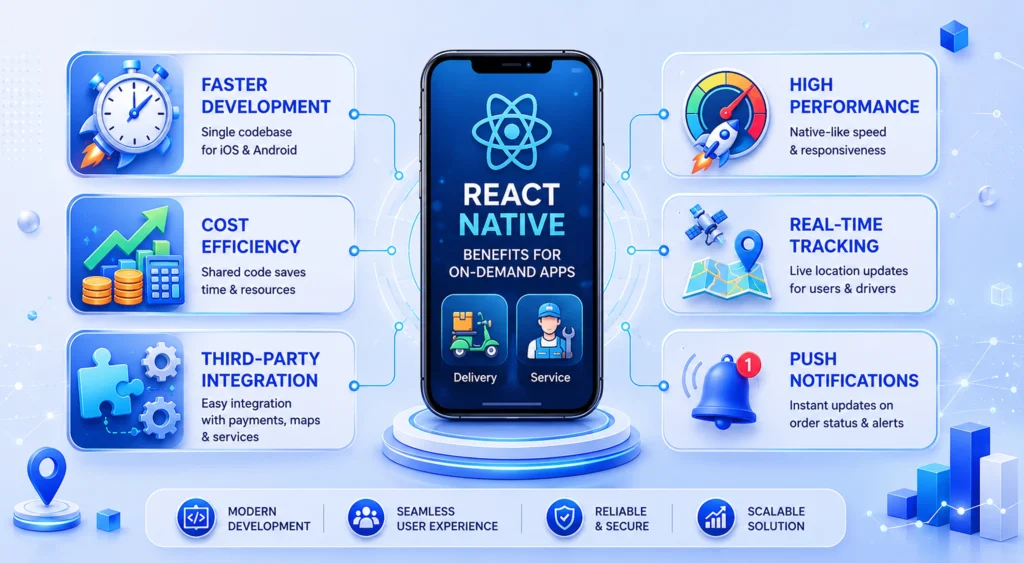
The on-demand economy runs on real-time, and React Native handles it well.
What teams are building:
- Food delivery platforms
- Ride-hailing services
- Home maintenance and repair apps
- Freelance marketplaces
Features users expect:
Real-time GPS tracking, live order status, in-app messaging, ratings and reviews, dynamic pricing, and push notifications. These aren’t differentiators anymore; they’re table stakes.
Can React Native handle real-time features like live tracking and chat?
Yes. React Native supports WebSockets, Firebase Realtime Database, GraphQL subscriptions, MQTT protocols, and native mapping integrations. You can build highly responsive real-time experiences without switching to a different framework.
React Native for Logistics and Supply Chain:
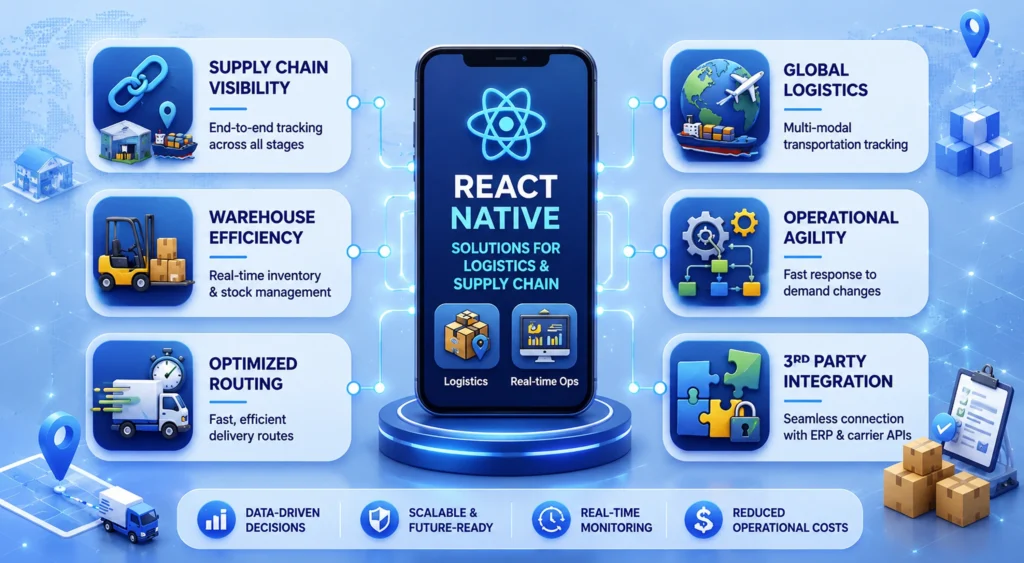
Logistics operations live on the ground, in warehouses, trucks, and delivery routes. Your app needs to work where connectivity is unreliable, and the stakes of downtime are high.
What teams are building:
- Fleet management platforms
- Shipment and package tracking systems
- Driver management apps
- Warehouse operations tools
- Inventory monitoring systems
Features field teams depend on:
Barcode and QR scanning, route optimization, GPS monitoring, proof-of-delivery workflows, and offline functionality. If your app fails when a driver loses signal, it fails.
Build offline-first:
React Native development solution supports offline-first architecture through SQLite, Realm Database, and local storage with background sync. Data persists locally, syncs when connectivity returns, so your operations keep moving either way.
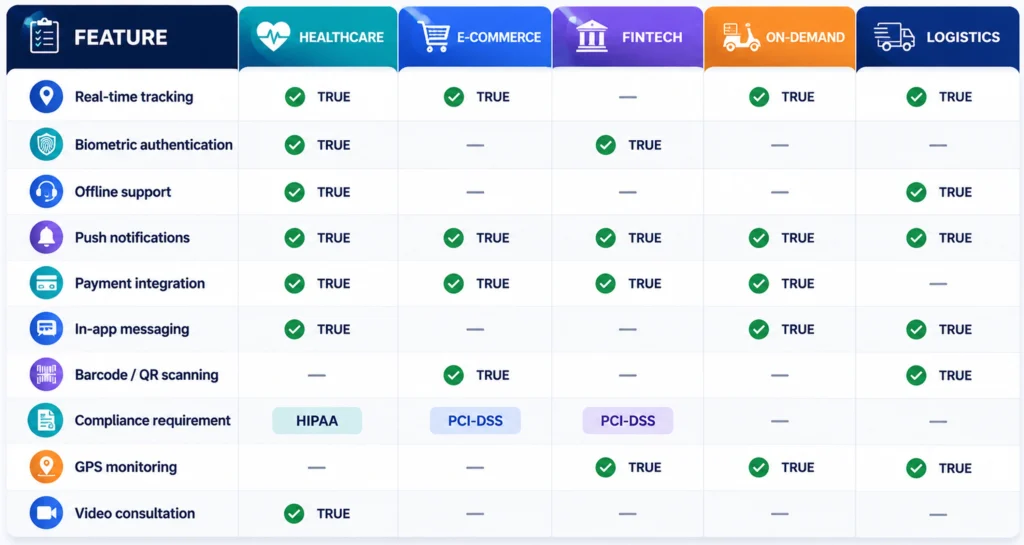
Industry Feature Comparison:
| Feature | Healthcare | eCommerce | FinTech | On-Demand | Logistics |
| Real-time tracking: | TRUE | TRUE | – | TRUE | TRUE |
| Biometric authentication: | TRUE | – | TRUE | – | – |
| Offline support: | TRUE | – | – | – | TRUE |
| Push notifications: | TRUE | TRUE | TRUE | TRUE | TRUE |
| Payment integration: | – | TRUE | TRUE | TRUE | – |
| In-app messaging: | TRUE | – | – | TRUE | TRUE |
| Barcode / QR scanning: | – | TRUE | – | – | TRUE |
| Compliance requirement: | HIPAA | PCI-DSS | PCI-DSS | – | – |
| GPS monitoring: | – | – | – | TRUE | TRUE |
| Video consultation: | TRUE | – | – | – | – |
What Does It Cost to Build a React Native App?
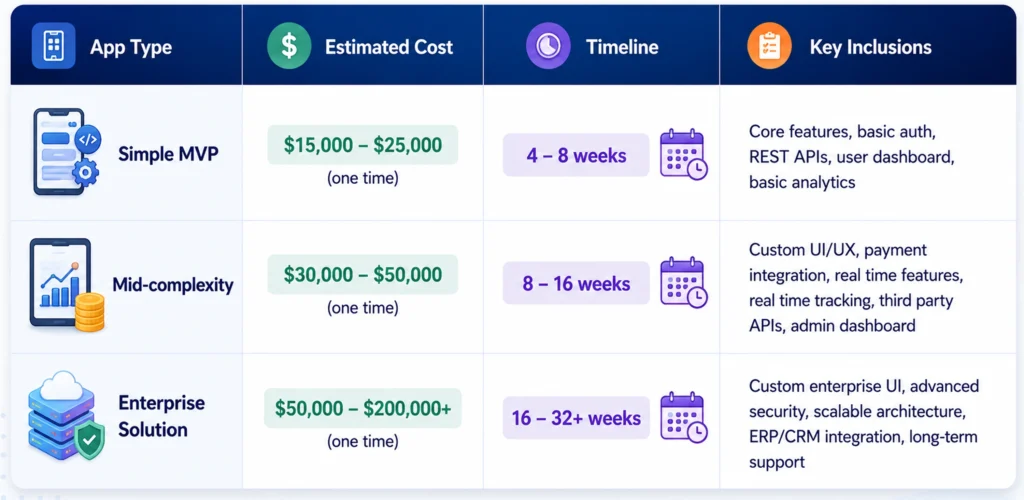
Development costs vary significantly based on complexity, compliance requirements, and integrations.
App Development Cost by Tier
| App Tier | Estimated Cost | Timeline | Key Inclusions |
| Simple MVP | $15,000 – $30,000 | 4 – 8 weeks | Core screens, basic auth, REST API, push notifications, iOS + Android |
| Mid-complexity | $30,000 – $80,000 | 8 – 16 weeks | Custom UI/UX, payment integration, real-time features, third-party APIs, and admin dashboard |
| Enterprise solution | $80,000 – $200,000+ | 16 – 32+ weeks | Compliance (HIPAA/PCI), advanced security, scalable architecture, ERP/CRM integration, long-term support |
Enterprise apps cost more because they demand more: advanced security architecture, complex backend integrations, scalability planning, compliance auditing, and long-term support. Build for what you need now, but architect for where you’re going.
How to Choose the Right Development Partner?
Your development partner shapes the outcome more than the framework does. Ask the right questions before you sign anything:
- Have they built apps in your specific industry?
- How do they handle compliance and security requirements?
- What does their QA and testing process look like?
- What engagement model do they offer: fixed scope, time-and-materials, or a dedicated team?
- Do they provide post-launch maintenance and support?
An experienced team brings both React Native expertise and industry-specific knowledge. That combination is what separates apps that ship on time from projects that stall in QA.
The Bottom Line
React Native works across industries because it solves a real problem: businesses need mobile apps that perform like native, ship fast, and don’t require two separate codebases to maintain. Whether you’re building a telemedicine platform, a fintech app, a logistics tracker, or an on-demand marketplace, the framework gives you the tools.
The framework is proven. Your job is to find the team and architecture that fits your industry’s specific demands. Get those right, and React Native will carry you the rest of the way.