

How Much Does React Native App Development Cost in 2026?
React Native app cost in 2026: $8K to $25K for an MVP, $25K to $70K mid-size, $70K+ enterprise. Rates by region, hidden costs and ways to save.
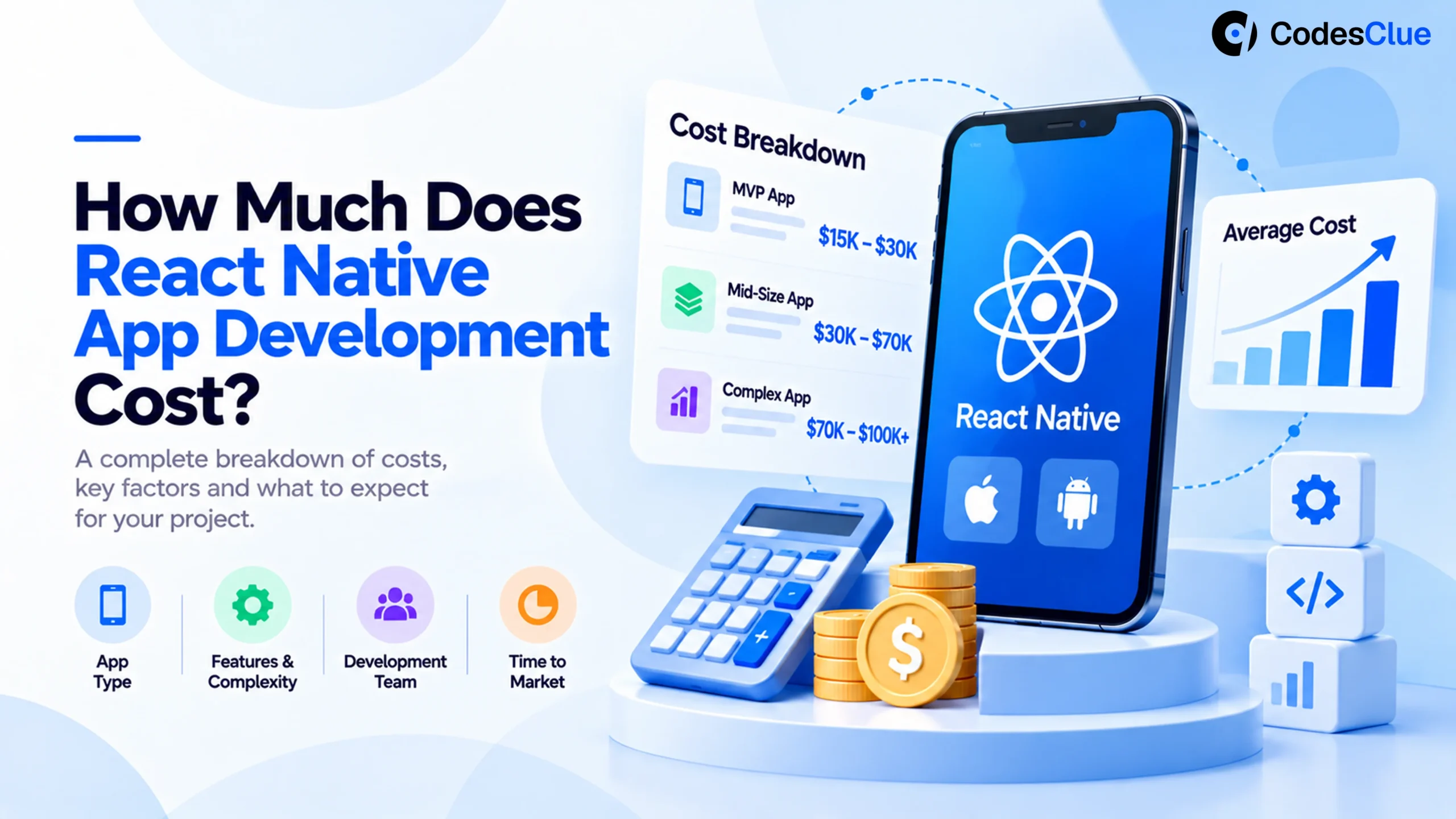
Quick answer: in 2026 most React Native apps cost $8,000 to $25,000 for an MVP (1 to 3 months), $25,000 to $70,000 for a mid-size app (3 to 6 months), and $70,000 to $250,000+ for an enterprise platform (6 to 12+ months). Below: what moves your number, what developers charge by region, and the costs most budgets forget.
React Native still continues to dominate cross-platform app development. Companies, from startups building MVPs to enterprises modernizing mobile experiences, are increasingly relying on React Native for its ability to deliver high-performance apps across iOS and Android with a single codebase.
Your exact React Native app development cost depends on development location, app complexity, UI/UX design, third-party integrations, and long-term scalability goals.
React Native App Cost Overview
Why Cost Transparency Matters for App Buyers in 2026?
Budgets for modern app development projects are no longer limited to coding alone. Businesses must also consider UI/UX, cloud infrastructure, security, API integrations, testing, and post-launch maintenance.
Clear pricing expectations help startups avoid overspending while enabling enterprises to plan scalable digital transformation initiatives efficiently.
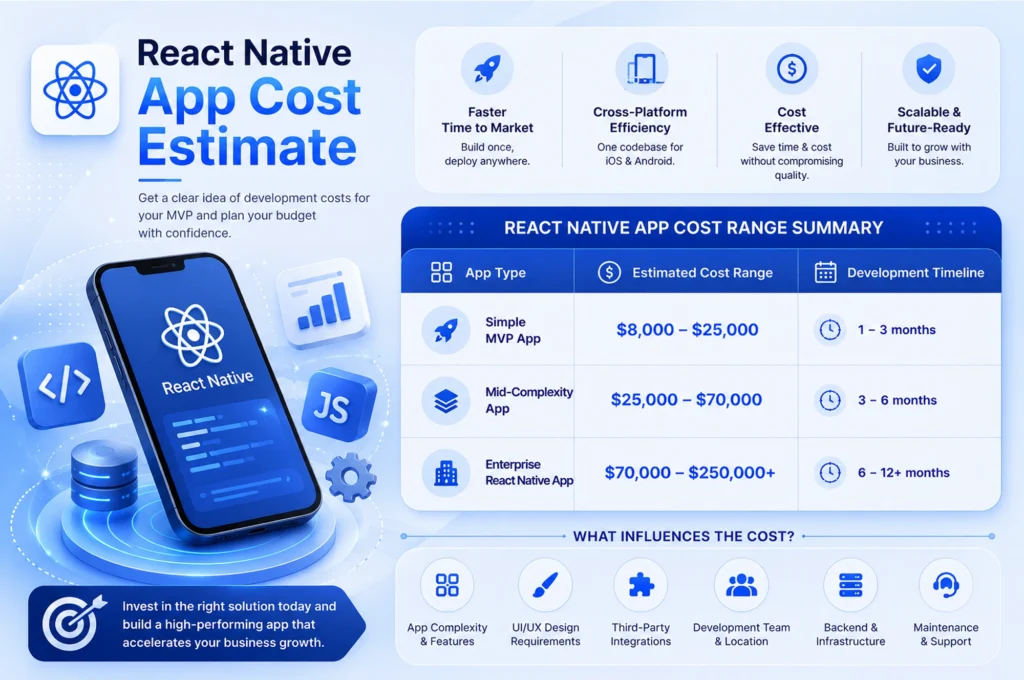
React Native App Cost Range Summary
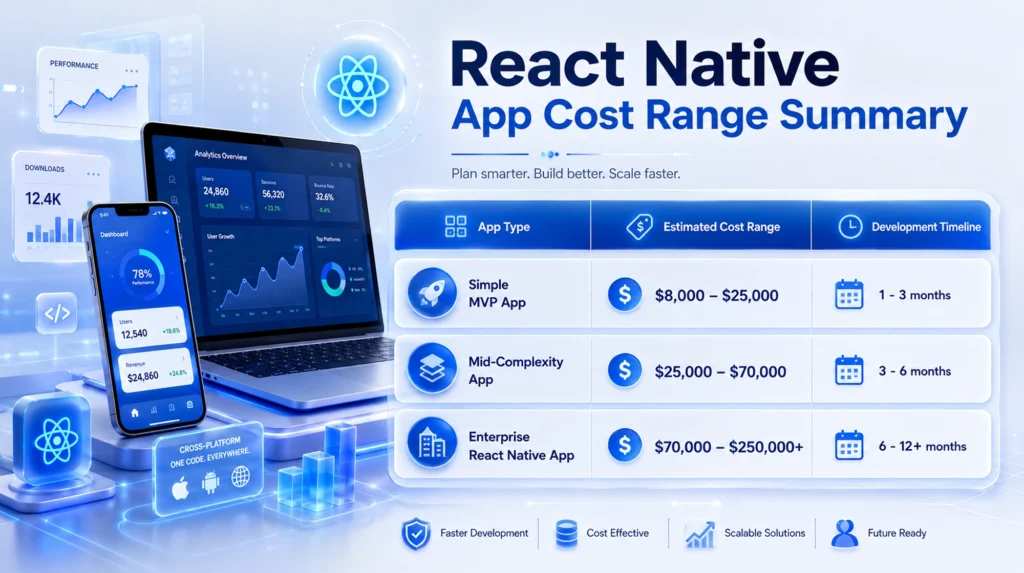
| App Type | Estimated Cost Range | Development Timeline |
|---|---|---|
| Simple MVP App | $8,000 – $25,000 | 1 – 3 months |
| Mid-Complexity App | $25,000 – $70,000 | 3 – 6 months |
| Enterprise React Native App | $70,000 – $250,000+ | 6 – 12 + months |
These estimates represent average React Native app development pricing in 2026 across global markets.
Key Factors That Affect React Native App Development Cost
App Complexity: Simple vs Mid vs Complex
The biggest pricing factor is application complexity. You can differentiate between simple and complex apps and understand their costing.
Simple Apps: Apps with basic authentication, dashboards, and limited APIs usually cost less because they require fewer development hours.
Examples: Calculator apps, basic booking apps, and MVP products
Mid-Complexity Apps: Apps involving payments, live chat, notifications, and admin dashboards require more backend engineering.
Examples: eCommerce apps, food delivery apps, and fitness platforms
Complex Enterprise Apps: Enterprise-grade platforms involve advanced architecture, AI features, scalability, compliance, and multi-role systems.
Examples: FinTech applications, healthcare systems, and logistics platforms
UI/UX Design Complexity
Custom animations, micro-interactions, advanced navigation, and branded experiences significantly increase design and frontend effort. A basic UI kit implementation may cost a few thousand dollars, while highly customized enterprise-grade interfaces can exceed $20,000 alone.
Third-Party API and Backend Integrations
Every additional integration adds development and testing complexity. Common integrations include payment gateways, Maps and GPS, CRM systems, AI APIs, analytics tools, and social login systems. Backend infrastructure accounts for 20–35% of the total React Native app cost.
Number of Platforms (iOS, Android, Web)
React Native helps businesses save costs through code reusability across platforms.
Typical code reuse:
- 70–90% shared between iOS and Android
- Additional effort for web adaptation if needed
Compared to separate native development teams, React Native often reduces development expenses by 30–40%.
Team Location and Engagement Model
A US-based agency may charge 4–5x more than an offshore development partner in India or Eastern Europe.
Location heavily impacts:
- Hourly rates
- Communication overhead
- Delivery timelines
- Maintenance costs
Timeline and Sprint Velocity
Urgent delivery timelines require larger teams and parallel sprint execution, increasing project cost substantially.
Faster releases generally mean:
- Higher staffing costs
- Additional QA resources
- Extended project management
React Native App Development Cost by App Type
Simple – MVP App Cost Estimate
A startup MVP with core functionality typically costs:
| Feature Scope | Estimated Cost |
|---|---|
| Basic MVP | $8,000 – $15,000 |
| MVP with APIs | $15,000 – $25,000 |
Typical features include:
- Login/signup
- User profiles
- Push notifications
- Simple backend
The average React Native MVP cost remains significantly lower than native development.
Mid-Complexity App Cost
Applications such as marketplaces, on-demand apps, and eCommerce platforms generally cost:
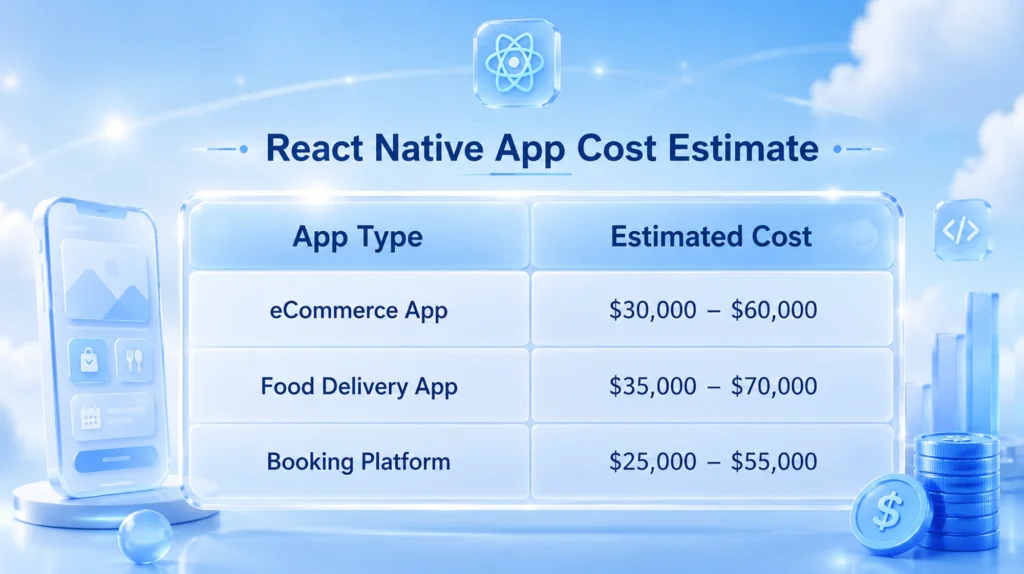
| App Type | Estimated Cost |
|---|---|
| eCommerce App | $30,000 – $60,000 |
| Food Delivery App | $35,000 – $70,000 |
| Booking Platform | $25,000 – $55,000 |
These apps require:
- Payment integration
- Real-time functionality
- Inventory management
- Multi-user roles
Enterprise / Complex App Cost
The average enterprise React Native app cost ranges between $70,000 and $250,000+.
Enterprise apps often require:
- AI integrations
- Advanced security
- HIPAA/GDPR compliance
- Scalable cloud infrastructure
- Analytics dashboards
Cost Comparison Table Across App Types
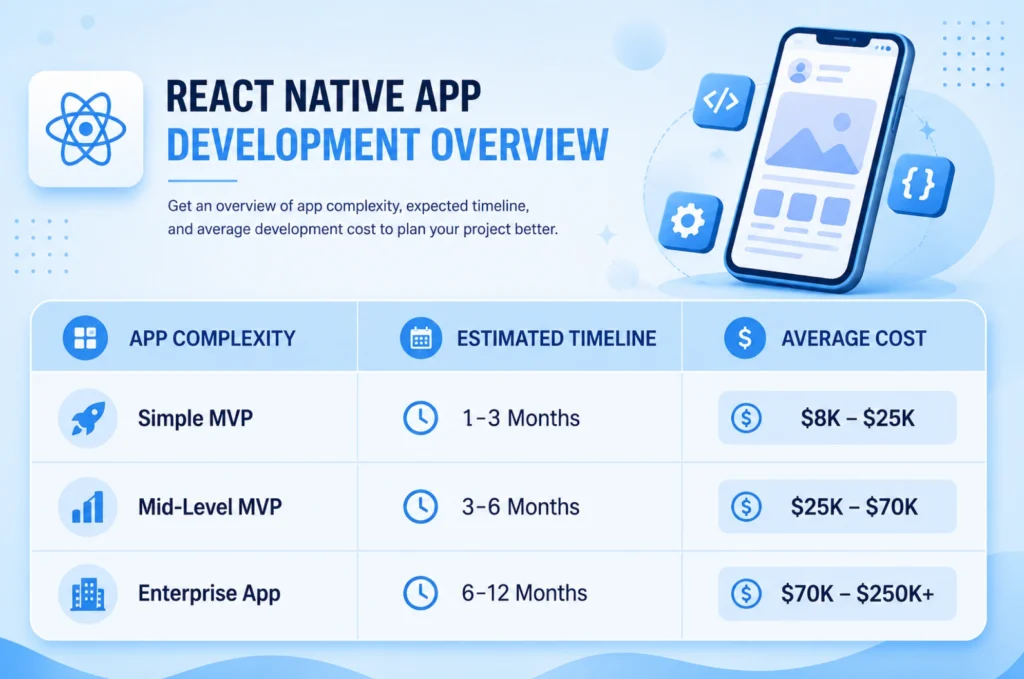
| App Complexity | Estimated Timeline | Average Cost |
|---|---|---|
| Simple MVP | 1-3 Months | $8K – $25K |
| Mid-Level MVP | 3-6 Months | $25K – $70K |
| Enterprise App | 6-12 Months | $70K – $250K+ |
React Native Developer Rates by Region in 2026
US & Canada React Native Developer Rates
North American developers charge premium rates due to higher operating costs.
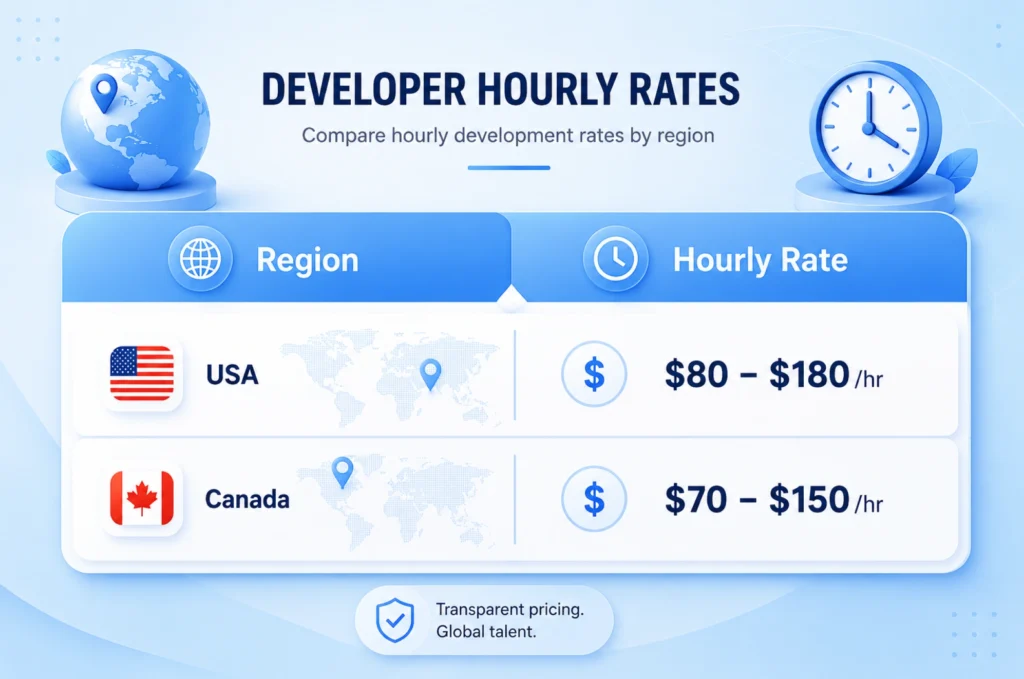
| Region | Hourly Rate |
|---|---|
| USA | $80 – $180/hr |
| Canada | $70 – $150/hr |
Eastern Europe Developer Rates
Eastern Europe remains a popular outsourcing destination with strong engineering talent.
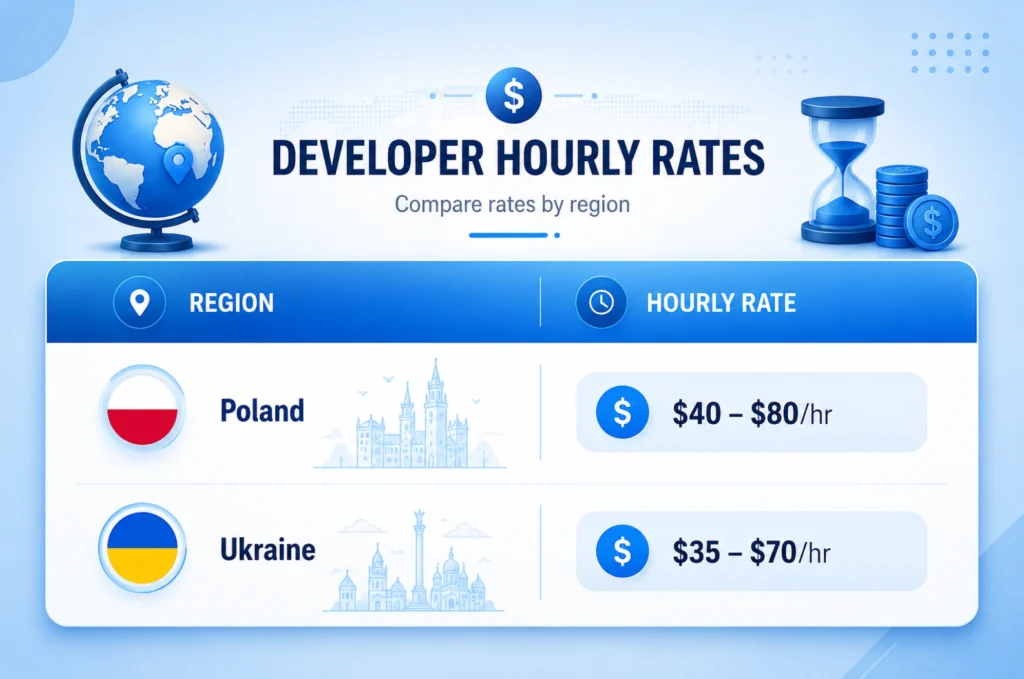
| Region | Hourly Rate |
|---|---|
| Poland | $40 – $80/hr |
| Ukraine | $35 – $70/hr |
South Asia & India React Native Rates
India continues to offer one of the best cost-to-quality ratios globally.
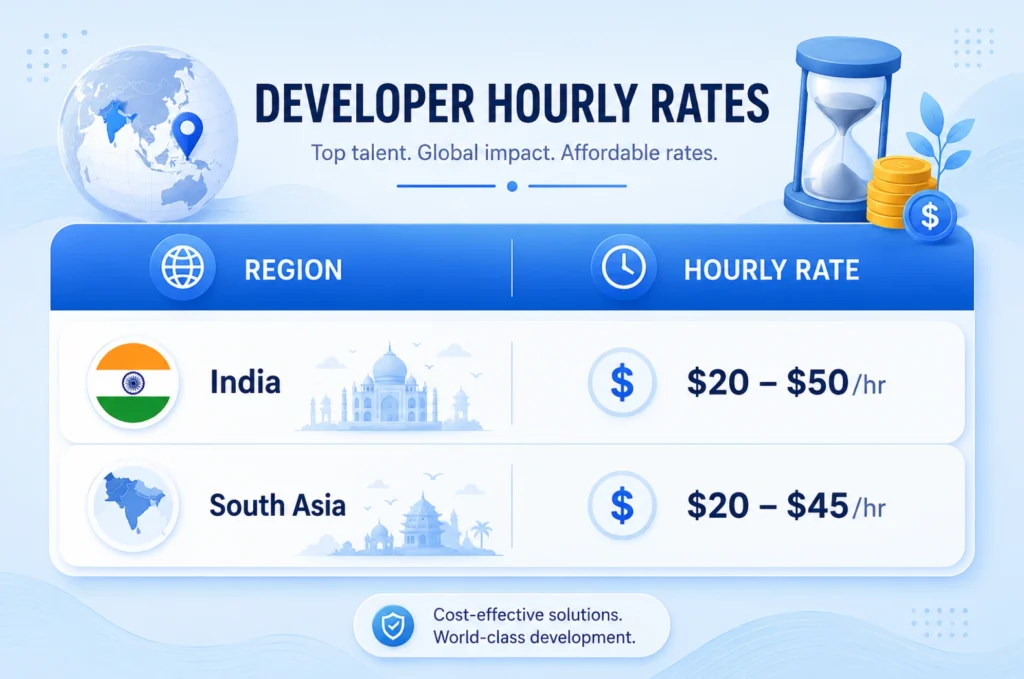
| Region | Hourly Rate |
|---|---|
| India | $20 – $50/hr |
| South Asia | $20 – $45/hr |
This is why many startups outsource React Native development cost by region analysis toward offshore teams.
Offshore vs Onshore Cost Tradeoffs
Offshore Advantages
- Lower development cost
- Scalable teams
- Faster hiring
Onshore Advantages
- Easier communication
- Timezone alignment
- Local compliance familiarity
The right model depends on project complexity and management requirements.
Agency vs Freelancer vs In-House: Cost Comparison
React Native Development Agency Cost
Agency pricing typically starts at $20,000+ for production-grade apps.
Pros
- Full-service delivery
- Dedicated QA and PM
- Faster scalability
Cons
- Higher pricing
- Long-term retainers possible
Hiring Freelance React Native Developers
Freelancers can reduce short-term costs but may introduce risks related to scalability, quality control, and long-term support.
Average freelance rates:
- Junior: $15–$35/hr
- Senior: $50–$120/hr
Building an In-House React Native Team
Internal teams provide maximum control but involve high operational expenses.
Additional costs include:
- Recruitment
- Benefits
- Infrastructure
- Retention
Annual in-house mobile team costs can exceed $250,000 easily.
Which Model Fits Your Budget and Stage?
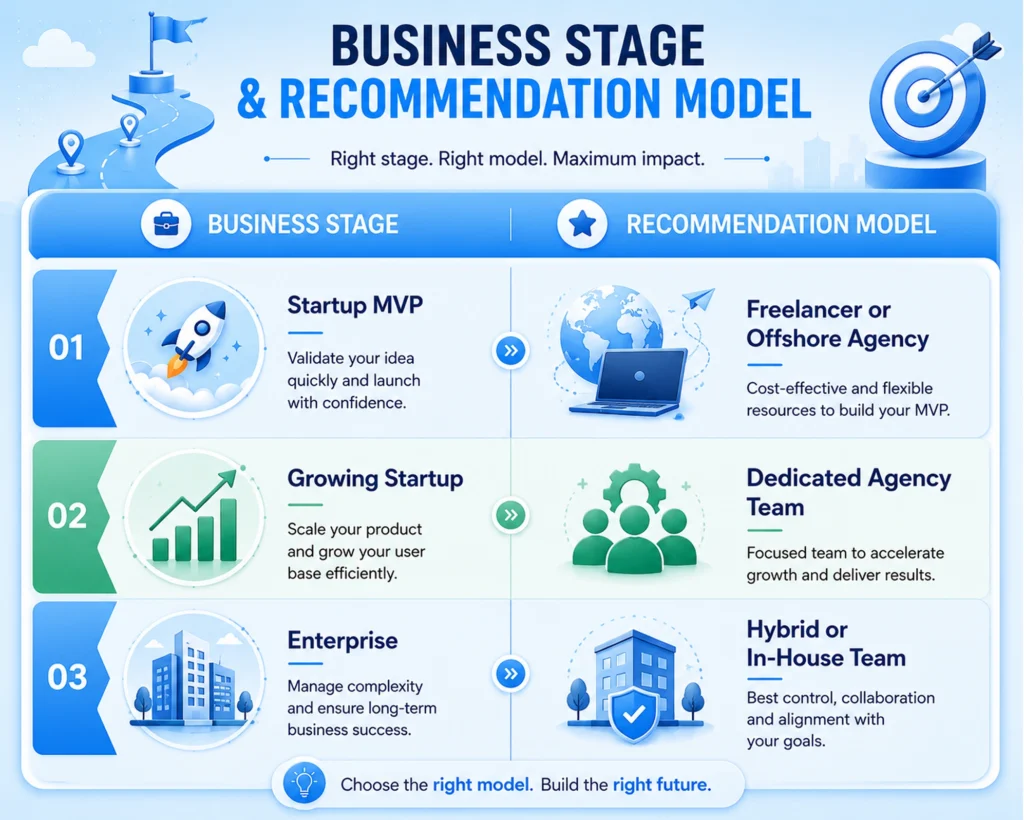
| Business Stage | Recommendation Model |
|---|---|
| Startup MVP | Freelancer or Offshore Agency |
| Growing Startup | Dedicated Agency Team |
| Enterprise | Hybrid or In-House Team |
React Native vs Flutter vs Native: Cost Breakdown
Code Reusability and Cost Savings in React Native
React Native enables businesses to maintain one shared codebase for multiple platforms to secure benefits such as lower development effort, reduced maintenance, and faster feature releases.
This makes React Native highly attractive for cost-conscious startups.
Flutter Development Cost Comparison
When comparing React Native vs Flutter cost, both frameworks are relatively close in pricing.
However, Flutter may require more custom UI effort. Simultaneously, React Native benefits from larger talent availability and it often integrates better with existing JavaScript ecosystems.
Native iOS + Android Development Cost
Separate native apps require two development teams, separate QA cycles, and independent maintenance.
Native development can cost 40–70% more than React Native for similar feature sets.
When React Native Saves You the Most Money?
React Native delivers maximum ROI when building MVPs, launching on both iOS and Android, releasing products quickly, maintaining limited engineering budgets.
From our work: Akcru
For Akcru, a film launch platform, we built the iOS, Android and Android TV apps in React Native, alongside the web platform. Read the Akcru case study.
Hidden Costs in React Native App Development
1. App Store Submission and Compliance Costs
Businesses must account for Apple Developer Program fees, Google Play Console fees, and legal compliance reviews.
2. Third-Party Service and API Licensing Fees
Popular services often include recurring pricing for Firebase, Stripe, Twilio, AI APIs, and Analytics platforms. These costs scale with user growth.
3. QA, Testing, and Performance Optimization
Testing typically consumes 15–25% of the total project budget. This includes device testing, automated testing, bug fixing, and performance optimization.
4. Post-Launch Maintenance and Support Costs
Average React Native app maintenance cost incur 15–25% of annual development cost. The maintenance includes security updates, OS compatibility, performance improvements, and feature enhancements.
React Native App Development Cost by Industry
Healthcare App Development Cost
Healthcare apps cost more due to compliance requirements like HIPAA and secure patient data handling. Average range includes $50,000 – $200,000+.
FinTech App Cost with Compliance Overhead
FinTech applications involve encryption, KYC verification, fraud detection, and banking APIs. Average range includes $70,000 – $250,000+.
eCommerce React Native App Cost
Typical eCommerce app budgets range from $30,000 to $100,000. Features usually include product catalogs, payments, inventory systems, and analytics
On-Demand and Logistics App Cost
Logistics platforms often require GPS tracking, real-time dispatch, and route optimization. Estimated range: includes between $40,000 – $150,000+.
How to Reduce Your React Native App Development Cost
1. Start with an MVP Approach
Launch an MVP, it helps validate market demand before large-scale investment. This approach minimizes early-stage risk and improves budget efficiency.
2. Use Pre-Built UI Component Libraries
Reusable libraries reduce frontend development effort and accelerate deployment.
Popular choices include:
- React Native Paper
- NativeBase
- React Navigation
3. Choose the Right Engagement Model
Offshore agencies often provide the best balance between cost and scalability for startups.
Enterprises may benefit from hybrid development models.
4. Prioritize Features Using Agile Sprints
Agile planning prevents overbuilding and ensures only high-impact features enter development initially.
This significantly lowers wasted engineering costs.
Conclusion
Summary of Cost Ranges
The final React Native app cost depends on app complexity, team location, UI/UX scope, Integrations and maintenance requirements.
Most businesses should expect:
- MVP apps: $8K – $25K
- Mid-level apps: $25K – $70K
- Enterprise platforms: $70K – $250K+
Next Step: Get a Free React Native Development Estimate by CodesClue
If you are planning to build a scalable cross-platform application, working with an experienced React Native development company like CodesClue can help optimize both budget and delivery speed.
A detailed project discovery session can provide accurate estimates tailored to your business requirements.
See how we work on React Native app development, or hire React Native developers for your team.
FAQs on React Native App Development Cost
How much does it cost to build a React Native app?
The average React Native app development cost ranges from $8,000 for MVPs to over $250,000 for enterprise-grade applications.
Is React Native cheaper than native development?
Yes. React Native typically reduces development costs by 30–40% because developers can reuse code across iOS and Android.
What is the hourly rate for a React Native developer?
The average React Native developer hourly rate ranges from $20/hr in India to $180/hr in the United States.
Can I build a React Native MVP under $10,000?
Yes, basic MVPs with limited features can sometimes be dev