


Running a cannabis dispensary means managing products, inventory, payments, compliance, and customers simultaneously. And if your software is not built specifically for this industry, it can make each of those things harder than they need to be.
The good news? Technology built for cannabis dispensaries has matured significantly. Custom dispensary platforms now handle everything from real-time inventory sync to compliance reporting to smart IoT-connected shelves. The dispensaries that invest in the right technology are running smoother, growing faster, and staying ahead of compliance requirements without the daily stress.
This blog covers exactly what it takes to build a cannabis dispensary app development the right way, from the features you need to the tech stack that powers it, the cannabis tech compliance regulations nobody talks about enough, the role of IoT, and real-world lessons from a platform CodesClue built from the ground up.
Why Do Most Cannabis Dispensaries Struggle with Generic Software?
A lot of dispensaries start with off-the-shelf solutions: Shopify, WooCommerce, or a basic point-of-sale system bolted onto a website. It makes sense at first. These platforms are familiar, relatively affordable, and quick to get running.
But cannabis retail is not like selling clothes or electronics. And very quickly, the cracks start showing.
Payment processing breaks down. Most mainstream payment gateways Stripe, PayPal, Square do not serve cannabis merchants due to federal restrictions. Generic eCommerce platforms are built around these gateways, leaving dispensaries scrambling for workarounds.
Inventory is always out of sync. A customer orders a product online. It shows as available. But in the dispensary, it sold out an hour ago. Generic platforms have no native connection to cannabis POS systems, so the online store and the physical store are always slightly out of step with each other.
Compliance is not built in. Cannabis retail requires age verification, purchase limits, product labelling standards, and in many US states, real-time reporting to government track-and-trace systems like METRC. Generic platforms were not designed with any of this in mind. Compliance becomes a manual effort, which means human error, missed reporting, and regulatory risk.
The admin experience is painful. When your software was not built for your industry, every routine task updating a product listing, changing a price, running a compliance report takes longer than it should and often requires technical help.
The bottom line is that cannabis dispensaries need purpose-built solutions like marijuana dispensary software solutions, not software adapted from another industry.
The Core Features Every Cannabis Dispensary Platform Needs
If you are planning to build or upgrade your dispensary platform, here are the features that actually matter and why each one is essential.
Real-Time POS Synchronisation
This is the single most important technical requirement in a cannabis dispensary platform. Every product on your website its availability, price, and description must reflect exactly what is in your POS system at all times.
When we built GreenReleaf, we integrated directly with the Dutchie POS API. This means when a budtender at the counter sells the last unit of a product, that product is automatically marked as out of stock on the online platform, no manual update needed, no customer placing an order for something that no longer exists.
This is why POS integration for cannabis apps should be treated as a core architectural requirement rather than a secondary integration.
Without this sync, you are constantly playing catch-up. With it, your online store is always telling the truth.
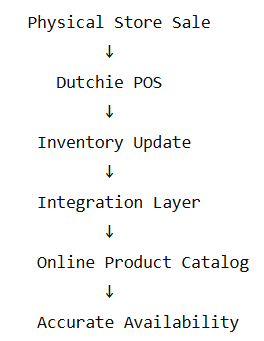
Popular cannabis POS platforms worth evaluating include Dutchie, Flowhub, Treez, and Blaze. Your development partner should have integration experience with the platform you already use or plan to adopt.
Smart Product Discovery
Cannabis customers shop differently depending on what they need: strain type, potency, product format, price range. A good dispensary platform makes it easy to find the right product quickly.
Smart search with filters for category, strain, THC/CBD percentage, and price does two things: it improves the customer experience, and it increases the likelihood of a sale. A customer who cannot find what they are looking for in the first thirty seconds will leave.
Cannabis customers shop differently depending on what they need: strain type, potency, product format, price range. A good dispensary platform makes it easy to find the right product quickly.
Smart search with filters for category, strain, THC/CBD percentage, and price does two things: it improves the customer experience, and it increases the likelihood of a sale. A customer who cannot find what they are looking for in the first thirty seconds will leave.
Useful product filters can include:
|
Filter |
Purpose |
| Category | Helps customers find the right product type |
| Strain | Supports strain-based discovery |
| THC/CBD | Helps customers narrow products by cannabinoid information |
| Format | Filters flower, edible, topical, vape, and other formats |
| Price | Helps customers shop within a budget |
| Brand | Helps customers find preferred brands |
| Availability | Shows products currently in stock |
| Location | Displays products available at a selected dispensary |
Age Verification and Compliance Controls
Age gating is not optional. It is a legal requirement. Every cannabis platform must verify that a user is of legal age before they can browse products, add items to a cart, or place an order.
The right approach is to build this into the core user journey, not as an afterthought. A poorly implemented age gate frustrates customers and creates compliance risk. A well-designed one is barely noticeable and satisfies regulatory requirements completely.
Cannabis-Friendly Payment Processing
Because mainstream payment gateways do not serve cannabis merchants, a dispensary platform needs to integrate with cannabis-compliant payment solutions. AeroPay is one of the leading options in the US, a bank-to-bank transfer solution that processes cannabis payments legally and securely.
When we built GreenReleaf, AeroPay integration was part of the core checkout flow. Customers can pay digitally without the friction of cash-only transactions that many dispensaries still rely on.
Admin Dashboard Built for Dispensary Operations
Your team manages products, prices, orders, and users every day. They should be able to do all of this without calling a developer.
GreenReleaf’s admin panel was designed with dispensary staff in mind, not technical users. Updating a product listing, adjusting a price, viewing order history, managing user accounts all of these tasks are straightforward and accessible from a single dashboard.
A well-designed admin panel can include:
|
Admin Area |
Key Functions |
| Products | Add, edit, categorize, and update products |
| Inventory | Monitor stock and availability |
| Orders | Manage incoming and completed orders |
| Customers | Manage permitted customer information |
| Promotions | Create and manage offers |
| Compliance | Monitor reports and exceptions |
| Analytics | Track sales and product performance |
| Integrations | Monitor POS and payment connections |
Scalable Architecture
A dispensary that launches with 50 products and 100 daily visitors will not always be that size. Your platform needs to be built on an architecture that scales with the business, handling more products, more locations, more traffic, and more complexity without needing to be rebuilt from scratch.
A scalable architecture can look like this:
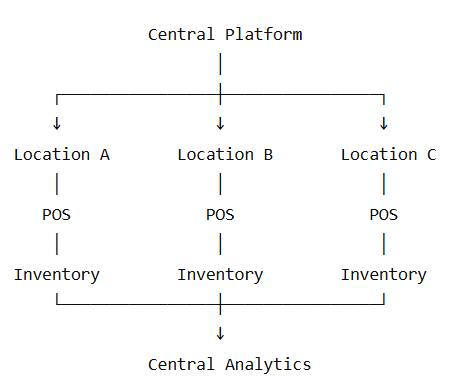
This approach gives dispensaries room to add locations, products, staff, and new integrations as the business grows.
The Technology Stack That Powers a Modern Dispensary Platform
Here is the exact tech stack CodesClue used to build GreenReleaf, and the reason behind each choice.
| Layer | Technology | Why It Works |
| Frontend | Angular | Handles complex product filtering and real-time updates |
| Backend | Node.js | Supports APIs, orders, and multiple integrations |
| Database | MongoDB | Handles flexible product attributes |
| Infrastructure | AWS | Provides scalable cloud infrastructure |
| POS Integration | Dutchie API | Supports inventory and product synchronization |
| Payment Processing | AeroPay | Supports digital payment workflows for cannabis businesses |
Angular (Frontend): Angular is a component-based frontend framework that handles complex product filtering, real-time data updates, and fast page rendering exceptionally well. For a dispensary platform where the product catalog can be large, and filters need to respond instantly, Angular is a strong choice.
Node.js (Backend): Node.js handles a large number of simultaneous connections efficiently. For a platform that is constantly receiving data from POS systems, processing orders, and serving product pages to users at the same time, Node.js keeps everything running without bottlenecks.
MongoDB (Database): Cannabis product catalogs are complex. A single product can have dozens of attributes: strain type, potency, format, terpene profile, lab results. MongoDB’s flexible schema handles this variety naturally, without the rigid structure that traditional SQL databases impose.
AWS (Infrastructure): Amazon Web Services provides the cloud infrastructure hosting, security, scalability, and uptime reliability. AWS is enterprise-grade, which matters for a platform that needs to be available around the clock and handle traffic spikes during promotions or new product launches.
Dutchie POS API (Integration): Dutchie is the leading POS system in the cannabis industry. Their API allows a dispensary’s online platform to pull real-time inventory, pricing, and product data directly from the POS. This is what makes the real-time sync described above possible.
AeroPay (Payment Processing): Cannabis-compliant bank-to-bank payment processing that gives customers a seamless digital payment option without the compliance risk of credit card processing.
This same stack pattern shows up across the industry: React or Angular on the frontend, Node.js, .NET, or Python on the backend, PostgreSQL or MongoDB for data, and AWS, Azure, or Google Cloud for hosting.
The Compliance Challenge Nobody Talks About Enough
Compliance is where most cannabis software projects run into unexpected difficulty, not because the technology is hard, but because the requirements are complex, vary by state, and change frequently.
This is why cannabis tech compliance regulations should influence the architecture from the beginning.
Here is what a cannabis dispensary platform may need to handle:
| Compliance Area | What the Platform Needs to Handle |
| Age verification | Confirm applicable customer eligibility |
| Purchase limits | Track and enforce applicable limits |
| Track-and-trace | Exchange required inventory and transaction information |
| Product labelling | Display required product and testing information |
| Data security | Protect customer and operational information |
| Audit trails | Record important system and admin actions |
| Reporting | Maintain accurate compliance records |
Age verification: Every user must confirm they are of legal age before accessing the platform. The age of legal access varies by state and product type.
Purchase limits: Many states limit how much cannabis a customer can buy in a single transaction. The platform must track and enforce these limits automatically.
METRC integration: METRC is the government-mandated track-and-trace system used in many US states. It requires dispensaries to report every sale, every inventory movement, and every disposal in real time. A dispensary platform operating in a METRC state must integrate with this system and send accurate data on every transaction.
A reliable workflow looks like this:
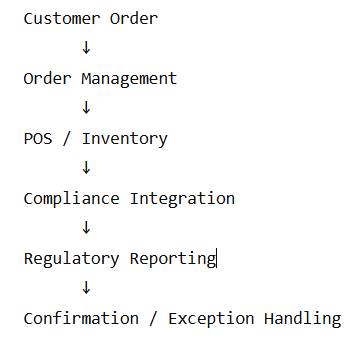
The platform should also handle failed API requests. If a regulatory endpoint becomes unavailable, the system should retain the relevant event, flag the issue, and support reconciliation.
Product labelling standards: Cannabis products must display specific information, such as potency percentages, health warnings, batch numbers, and lab test results. The platform must enforce these standards on every product listing.
Data security: Customer purchase data in cannabis carries significant privacy sensitivity. In some states, privacy requirements overlap with healthcare data standards. The platform must handle this data securely and in compliance with applicable regulations.
The most important lesson here is that compliance must be designed into the architecture from the beginning, not added later. Retrofitting compliance onto a platform that was not built for it is expensive, time-consuming, and rarely fully effective. When we built GreenReleaf, compliance was part of the architecture conversation from day one.
The Role of IoT in Modern Cannabis Dispensaries
A dispensary app is the digital layer. But cannabis retail also has a physical layer: shelves, storage rooms, security checkpoints, cash handling areas, display cases. The most forward-thinking dispensaries are now connecting these physical environments to their digital platforms using IoT (Internet of Things) technology.
Integrating IoT with POS systems can facilitate real-time inventory tracking, environmental monitoring for product storage, and automated reordering processes, ensuring optimal product quality and streamlining operations.
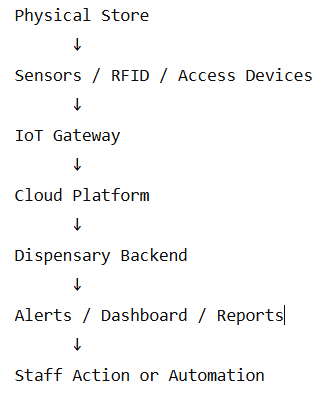
Here is what IoT in cannabis retail looks like in practice for a cannabis dispensary:
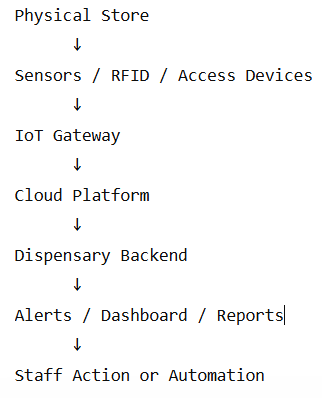
Integrating IoT with POS systems can support real-time inventory tracking, environmental monitoring, security, and automated alerts.
Smart Shelf and Inventory Sensors
Weight sensors placed on physical shelves detect when a product is running low. When stock drops below a set threshold, the system automatically updates the online platform to show low availability or triggers a restock alert for staff.
Tracking technologies like RFID create a more detailed picture of inventory and sales, which helps streamline regulatory compliance, a considerable time-saver for an industry as highly regulated as cannabis.
This solves one of the most persistent pain points in cannabis retail: the gap between what the POS says and what is physically on the shelf.
For example:
Environmental Monitoring for Storage Compliance
Cannabis products are sensitive to temperature, humidity, and light. Improper storage degrades product quality and can violate compliance standards in many states.
IoT devices such as RFID tags and sensors ensure accurate seed-to-sale tracking, providing transparency and compliance with government regulations, while helping businesses monitor inventory levels in real time and reduce the risk of theft.
IoT sensors in storage rooms and display cases monitor conditions continuously, sending alerts when something goes out of range and automatically logging environmental data for compliance reporting. This removes manual record-keeping and reduces human error in regulatory submissions.
Smart Access Control and Security
Cannabis dispensaries are high-security environments. Vaults, cash handling areas, and restricted storage must be accessed only by authorised staff, and every access event must be logged.
IoT-based access control systems track entry and exit with timestamps and employee IDs, feeding this data directly into the dispensary management platform. The result is a detailed audit trail that satisfies compliance requirements and security standards simultaneously.
Connected Digital Signage
In-store digital displays connected to the same admin dashboard that powers the online platform mean that price changes, new arrivals, and promotions appear everywhere at the same time on the website, in the app, and on screens inside the dispensary without manual updates to each surface.
Connected sensors monitor temperature and foot traffic, giving dispensary managers visibility into operations without complexity, and automation takes care of inventory, compliance reports, and POS transactions so staff can focus on helping customers.
The dispensary that connects its physical environment to its digital platform does not just operate more efficiently. It has a compliance and operational advantage that competitors running disconnected systems cannot easily replicate.
Real-World Lessons from Building GreenReleaf
GreenReleaf is a modern cannabis dispensary platform that CodesClue built from the ground up. Here is what we learned in the process: the things that are easy to underestimate until you are actually building.
Lesson 1: Real-Time Sync Is Not Optional
The temptation when building a dispensary platform is to treat inventory sync as a background task, something that updates every few minutes. That is not good enough.
A product that sells out in the physical dispensary needs to be marked unavailable online within seconds, not minutes. We built the Dutchie POS integration to sync continuously, not on a schedule. This eliminated overselling and the customer service problems that come with it.
Lesson 2: Admin Usability Matters as Much as Customer UX
Most dispensary platforms spend the majority of design effort on the customer-facing side. The admin experience is treated as secondary, functional but not beautiful.
In practice, the admin panel is used by dispensary staff for hours every day. A poorly designed admin experience means slow operations, mistakes, and frustrated employees. We designed GreenReleaf’s admin dashboard with the same care as the customer-facing interface: clean, logical, and fast to use without any technical background.
Lesson 3: Performance Under Load Requires Architectural Discipline
A new product launch, a flash sale, or a viral social media moment can send a spike of traffic to a dispensary platform in minutes. If the architecture was not designed for this, the site slows down or crashes exactly when you need it most.
GreenReleaf was built with a modular, scalable backend architecture on AWS that handles traffic spikes without performance degradation. This required deliberate decisions at the architecture stage, not patches applied after the fact.
Lesson 4: Compliance Is Architecture, Not a Feature
It is tempting to treat compliance as a checklist: add an age gate here, add a purchase limit there. But compliance requirements interact with each other and with the core platform in complex ways.
The right approach is to make compliance part of how the system is designed from the beginning. Data structures, user flows, reporting pipelines all of these need to be built with compliance in mind, not retrofitted. We designed GreenReleaf’s compliance layer into the core architecture, which made it significantly easier to adapt when regulatory requirements changed.
How Much Does It Cost to Build a Cannabis Dispensary App in 2026?
This is the question most dispensary owners ask first, and it is the right question.
The cannabis app development cost depends on the platform’s features, integrations, compliance requirements, number of locations, design complexity, and IoT requirements.
Here is a realistic breakdown:
| Platform Type | Estimated Cost | Timeline |
| Basic dispensary website with POS sync | $15,000–$25,000+ | 8–12 weeks |
| Full custom dispensary platform | $30,000–$60,000+ | 12–20 weeks |
| Enterprise multi-location platform | $50,000–$80,000+ | 20–30 weeks |
| IoT integration add-on | $8,000–$25,000+ | Depends on scope |
Basic dispensary website with POS sync: A clean, functional online presence with real-time POS integration, product browsing, and a simple checkout experience. Estimated cost: $15,000 – $30,000. Timeline: 8 – 12 weeks
Full custom dispensary platform: Custom design, full admin dashboard, compliance controls, cannabis-compliant payment integration, age verification, and scalable architecture. Estimated cost: $40,000 – $80,000+ Timeline: 12 – 20 weeks
Enterprise multi-location dispensary platform: Multiple locations, unified inventory management, advanced reporting, staff management, and enterprise-grade security and compliance. Estimated cost: $80,000 – $150,000+ Timeline: 20 – 30 weeks
IoT integration add-on: Smart shelf sensors, environmental monitoring, access control integration, and connected digital signage added to an existing or new platform. Estimated cost: $8,000 – $25,000+ depending on scope and hardware
These are development costs. Hardware costs for IoT devices are separate from software development and depend on how many locations and sensors you deploy.
A phased approach can help control cannabis app development costs while allowing the platform to grow.
Suggested Development Roadmap
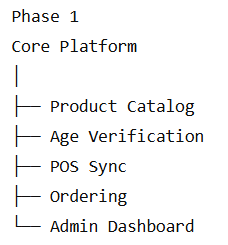
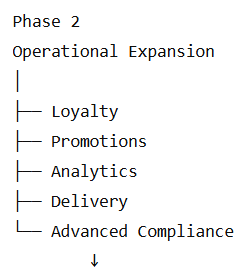
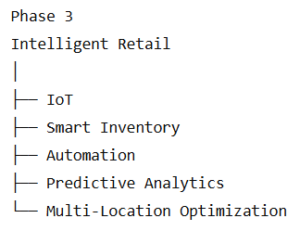
This approach allows dispensaries to launch the essential platform first and add advanced capabilities as the business grows.
How to Choose the Right Development Partner for Your Dispensary
Not every software development company is equipped to build for the cannabis industry. Here is what to look for when evaluating a development partner:
Cannabis-specific experience. Ask to see real projects, not mock-ups or concept designs, but live platforms they have built and launched. GreenReleaf is a live example of what CodesClue has delivered in this space.
POS integration expertise. The most common cannabis POS systems in the US are Dutchie, Flowhub, Treez, and Blaze. Your development partner should have direct integration experience with at least one of these, ideally the one you use.
Compliance knowledge. Your development partner needs to understand the compliance requirements in your state: METRC, age gating, purchase limits, and data security standards. Ask them specifically about their compliance approach before signing anything.
Post-launch support. Cannabis regulations change. POS APIs get updated. Security patches need to be applied. A development partner who disappears after launch leaves you exposed. Make sure ongoing maintenance and support are part of the engagement.
Clear process. Good development partners have a clear, documented process: discovery, scoping, build, QA, deployment, handoff. Ask to see it.
A useful evaluation framework is:
|
What to Evaluate |
Questions to Ask |
| Cannabis experience | Have you built and launched cannabis software? |
| POS integration | Which cannabis POS platforms have you integrated? |
| Compliance | How will compliance rules be built into the architecture? |
| Security | How will customer and operational data be protected? |
| Scalability | How will the platform support multiple locations? |
| IoT | Can you integrate sensors, RFID, or access-control systems? |
| QA | How will you test POS, inventory, payments, and compliance? |
| Support | How will you handle future API and regulatory changes? |
Conclusion: The Cannabis Industry Deserves Purpose-Built Technology
The cannabis industry is growing fast. The global cannabis delivery service market is projected to reach $137.7 billion in 2026, reflecting rapid expansion across legalized regions. The dispensaries that will lead this market are not the ones with the biggest budgets; they are the ones with the best technology.
Generic software creates operational chaos: inventory discrepancies, compliance risk, poor customer experience, and frustrated staff. Purpose-built cannabis technology eliminates these problems and replaces them with systems that run reliably, scale with the business, and adapt to changing regulations without a crisis every time something changes.
CodesClue has built for this industry. We understand the compliance requirements, the technical complexity, and the operational reality of running a dispensary. GreenReleaf is the proof.
If you are planning to build or upgrade cannabis dispensary app development, contact CodesClue.