
SaaS Development Process: Step-by-Step Guide from Idea to Launch
A step-by-step guide to SaaS development: covering idea validation, design, development, testing, and launch. Everything you need to build smarter.
Building a SaaS product has never been easier, but building one that succeeds still requires a structured SaaS development process.
Despite advances in AI-powered development and cloud technologies, around 90% of startups fail within the first five years of operation, often because they skip market validation or product planning. Execution through a structured process, not just the idea itself, is what actually separates surviving SaaS products from failed ones.
A complete SaaS development process moves through four core stages:
Discovery → Architecture → MVP → Scale.
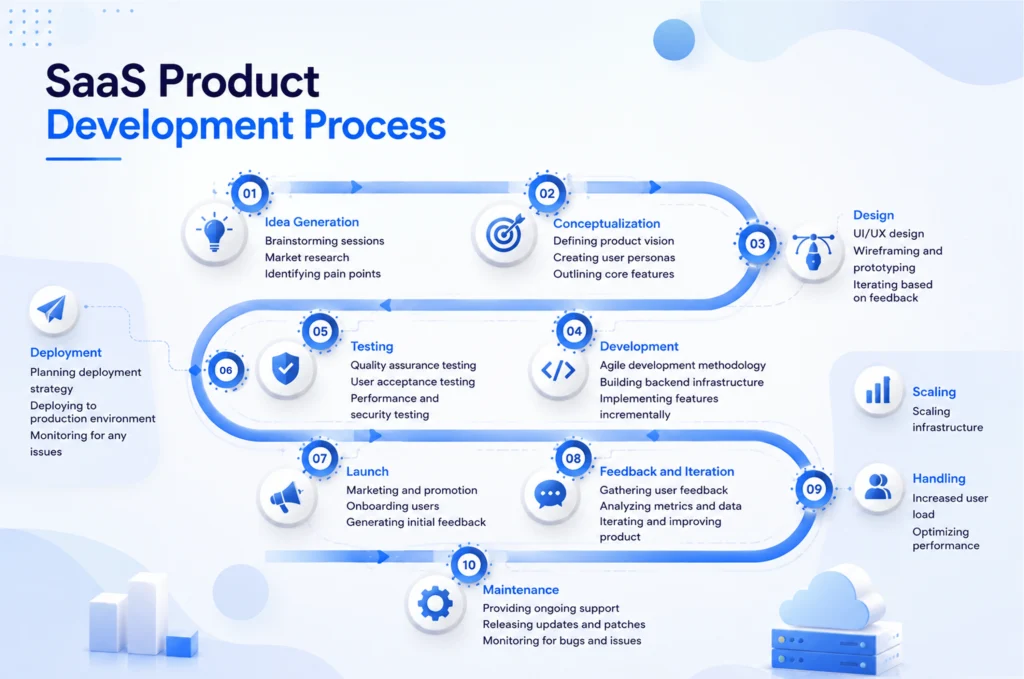
You start by validating that a real problem exists, designing the technical foundation that supports growth, building a focused MVP around the core value proposition, and then iterating continuously based on real user behavior.
With AI-powered development tools, many startups now launch an AI-accelerated SaaS MVP in just 8 to 14 weeks, a fraction of the time traditional roadmaps once required.
This guide walks you through the complete SaaS development process, from idea validation and MVP development to launch and growth, as shown in the infographic given below.
Phase 1: Market Discovery & Idea Validation
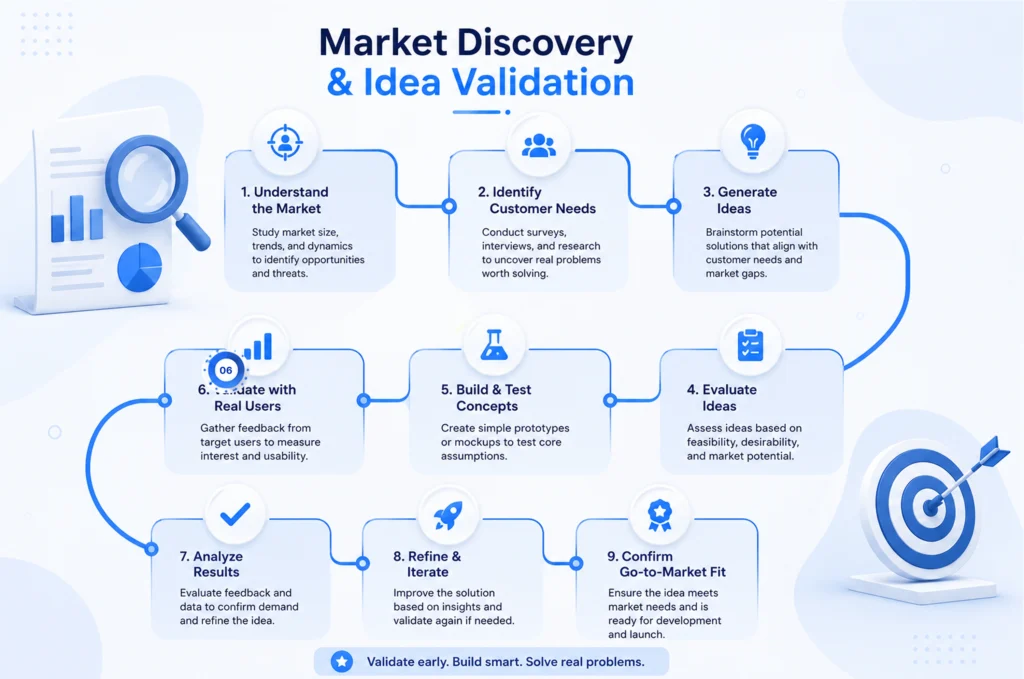
The biggest mistake SaaS founders make isn’t building too slowly. It’s building a product nobody needs.
Before investing in development, validate that your idea solves a real problem customers are willing to pay for. Frameworks like Jobs-To-Be-Done (JTBD) help you focus on the outcomes users want instead of assumptions.
Next, study your competitors. Look beyond feature comparisons to identify market gaps, underserved audiences, or unresolved pain points.
You don’t need a finished product to validate demand. A landing page, clickable prototype, waitlist, or small ad campaign can provide valuable feedback before you write a single line of code.
The goal isn’t to prove your idea is unique. It’s to prove there’s a market for it.
Phase 2: Product Strategy & Monetization Framework
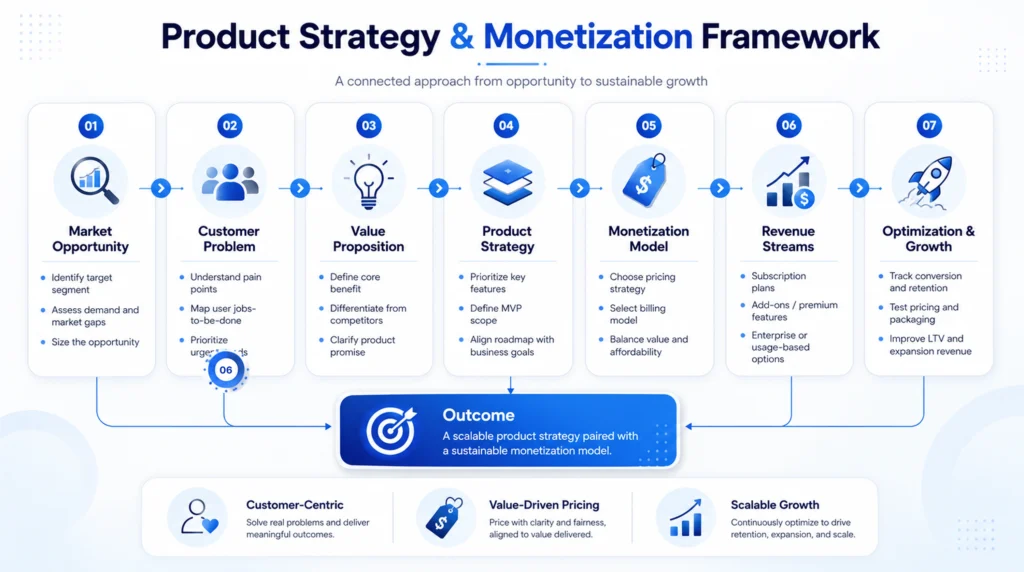
Once you have validated your idea, define what to build and how it will generate revenue.
Start by mapping user personas to essential product features. Prioritize capabilities that solve real customer problems, and leave non-essential features for future releases.
Next, choose a pricing model that aligns with your customers and business goals. Common SaaS pricing models include:
- Usage-Based Pricing: Customers pay for what they use (e.g., AWS, Snowflake).
- Tiered Pricing: Different feature sets for different customer segments (e.g., Slack, HubSpot).
- Per-User Pricing: Pricing scales with the number of users or seats.
Finally, define success metrics before development begins.
- Track KPIs such as MRR (Monthly Recurring Revenue)
- CAC (Customer Acquisition Cost)
- LTV (Customer Lifetime Value)
- Payback period to measure growth and profitability from day one.
Phase 3: UX/UI Design & Prototyping
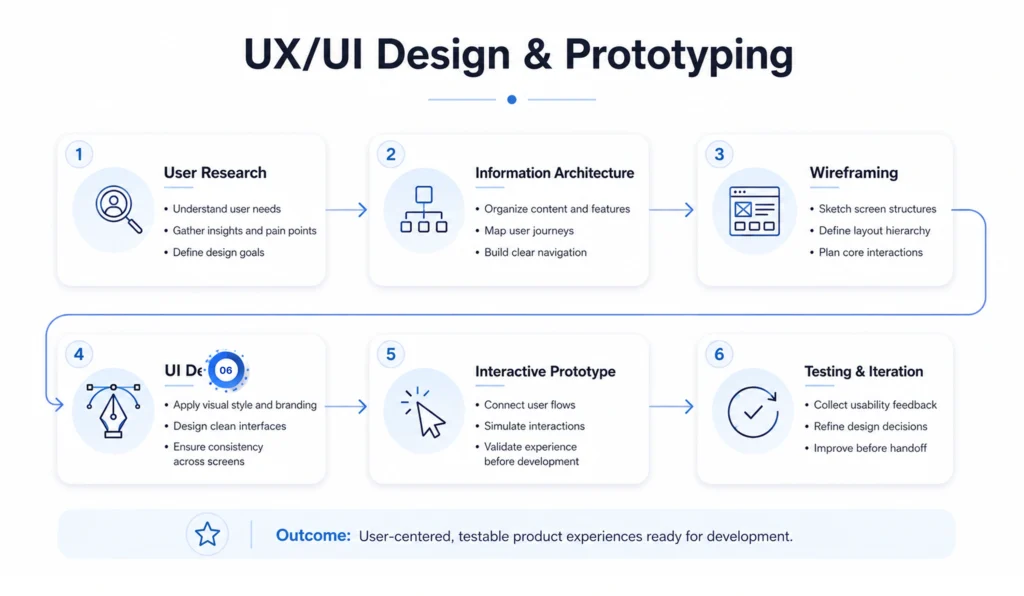
A great SaaS product doesn’t just look good. It helps users experience value quickly. That’s why modern SaaS design focuses on reducing Time-to-Value (TTV), guiding users to their first “Aha!” moment as fast as possible.
Start with low-fidelity wireframes to validate user flows and core functionality. Once the experience is refined, convert it into high-fidelity prototypes using a consistent design system and reusable UI components.
Finally, design with a mobile-first mindset. Your SaaS application should deliver a seamless, responsive experience across desktops, tablets, and smartphones, ensuring users can accomplish tasks from any device.
Phase 4: Technical Architecture & Tech Stack Selection
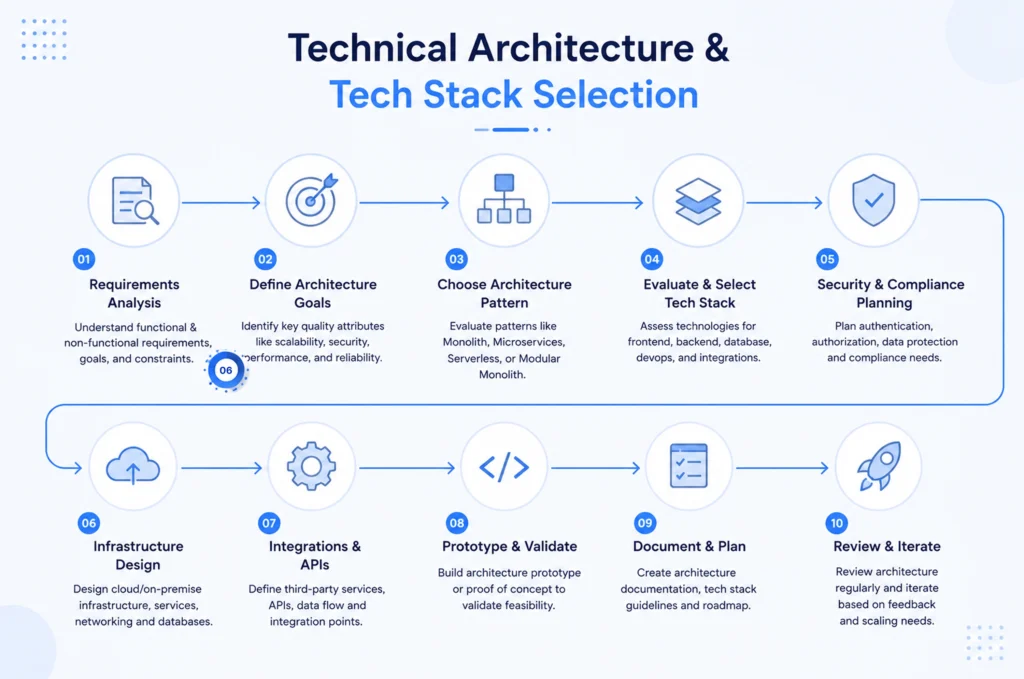
The right technical foundation determines how well your SaaS product scales, performs, and evolves. Getting this phase right means following proven SaaS architecture best practices from day one, rather than retrofitting them after launch.
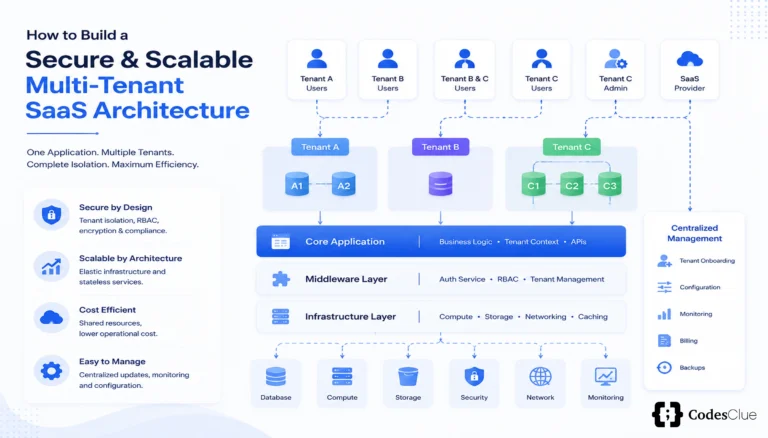
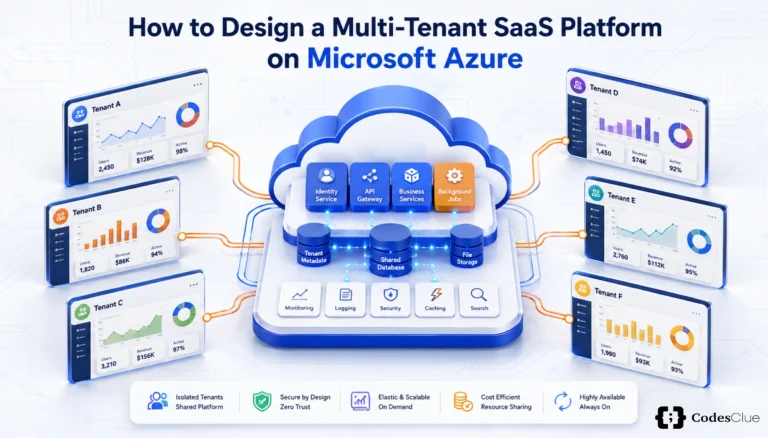
Start by choosing the right architecture. Single-tenant architecture offers greater security and customization for enterprise applications, while a multi-tenant cloud architecture delivers better scalability, lower infrastructure costs, and higher operating efficiency for most SaaS products. For most startups and growth-stage companies, multi-tenant cloud architecture remains the default choice unless strict data isolation is a hard requirement.
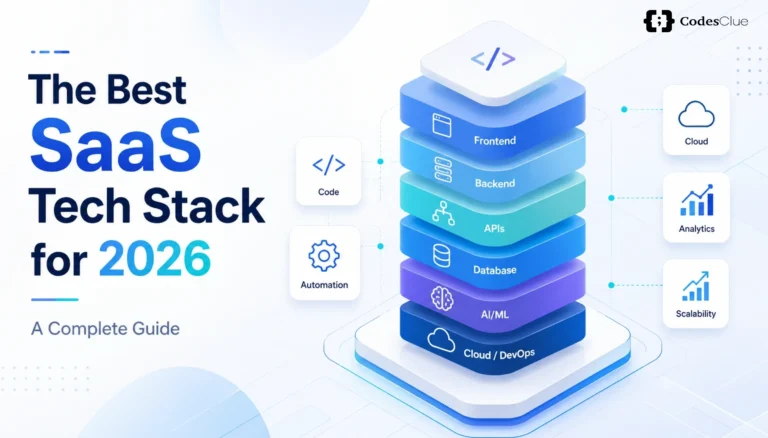
Choosing a SaaS tech stack is just as critical as choosing the right architecture pattern, since it determines development speed, hiring pool, and long-term maintainability. Select a technology stack that supports long-term growth:
- Frontend: Next.js, React, or Svelte
- Backend: Node.js, FastAPI, or Go
- Database: PostgreSQL, PlanetScale, or Fauna
Finally, adopt an API-first approach. Build modular services, implement secure authentication with OAuth and MFA, and use webhooks to simplify third-party integrations and future product expansion.
Phase 5: SaaS MVP Development & Engineering Lifecycle
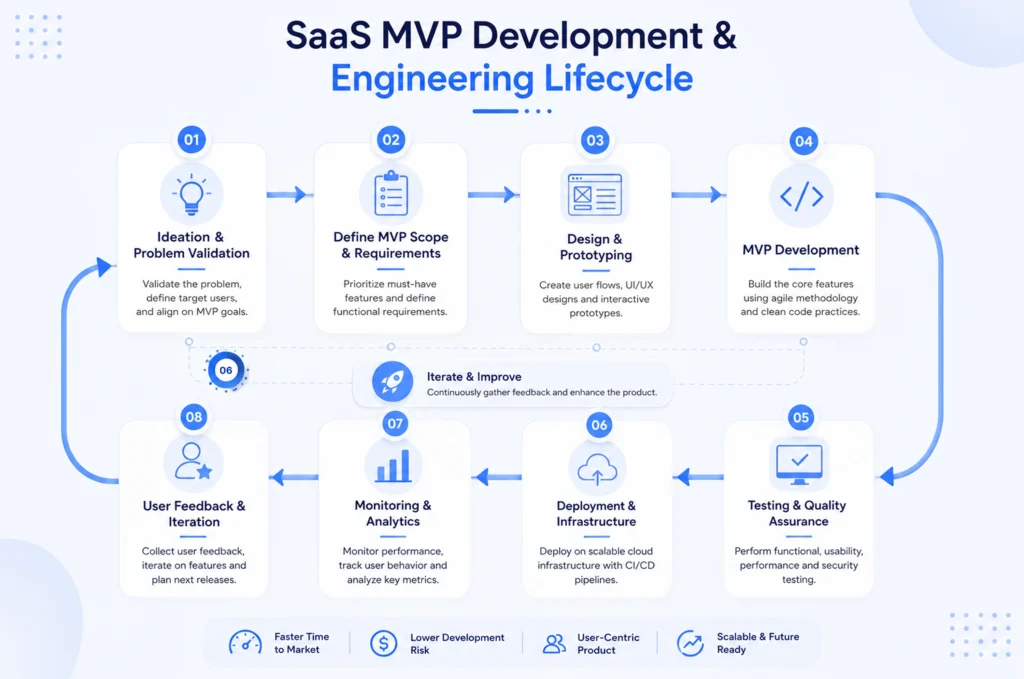
With your strategy and architecture in place, it’s time to begin SaaS MVP development. Focus on the single core feature that solves your users’ biggest pain point, and leave secondary features for future releases.
A focused MVP helps you validate product-market fit faster while reducing development time and costs.
AI-powered development tools have transformed the SaaS development process, enabling many startups to launch an MVP in 8–14 weeks instead of several months. While AI accelerates coding, testing, and documentation, thoughtful architecture and product decisions remain critical to long-term success.
From day one, adopt DevOps and security best practices. Set up CI/CD pipelines, automated testing, and prepare for compliance standards such as SOC 2, GDPR, and HIPAA.
Building these practices early creates a secure, scalable foundation that’s easier to maintain as your SaaS product grows.
Phase 6: Go-to-Market (GTM) & Product Launch
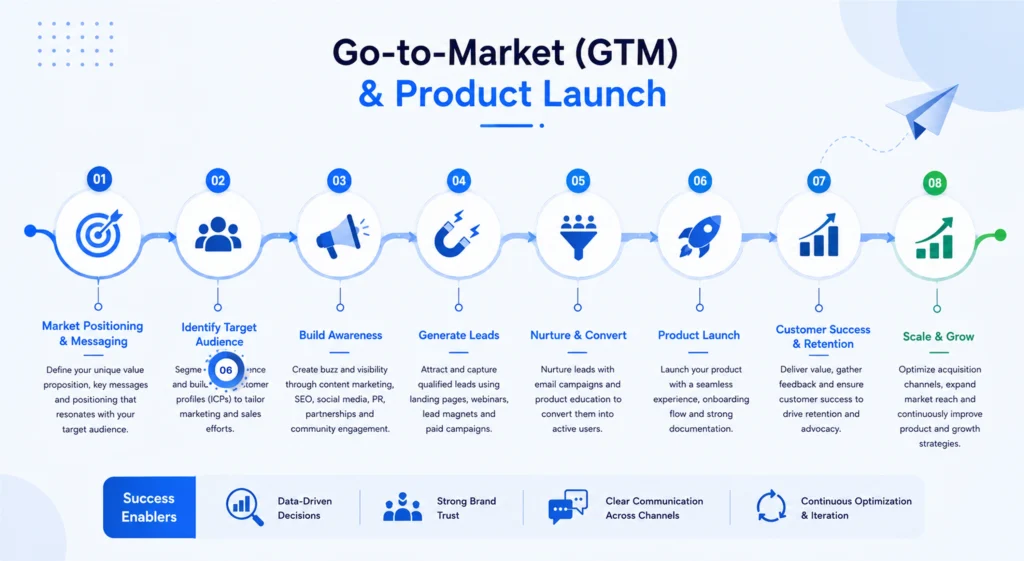
A successful SaaS go-to-market strategy (GTM) starts well before launch day. Build anticipation through beta waitlists, Product Hunt preparation, email campaigns, and early adopter communities like G2 and Indie Hackers.
Early engagement validates demand and helps refine your product with real user feedback. As launch approaches, align your marketing, product, and engineering teams around a clear rollout plan.
A coordinated launch generates stronger visibility, improves user onboarding, and creates momentum from day one. On launch day, focus on both visibility and reliability.
Monitor application performance, infrastructure, and customer support feedback in real time so your team can resolve issues quickly and deliver a seamless user experience.
Finally, build Product-Led Growth (PLG) into the product itself. Features like free trials, interactive onboarding, referral programs, and self-service experiences help users realize value faster, increasing activation, retention, and long-term growth.
Phase 7: Post-Launch Iteration & Maintenance
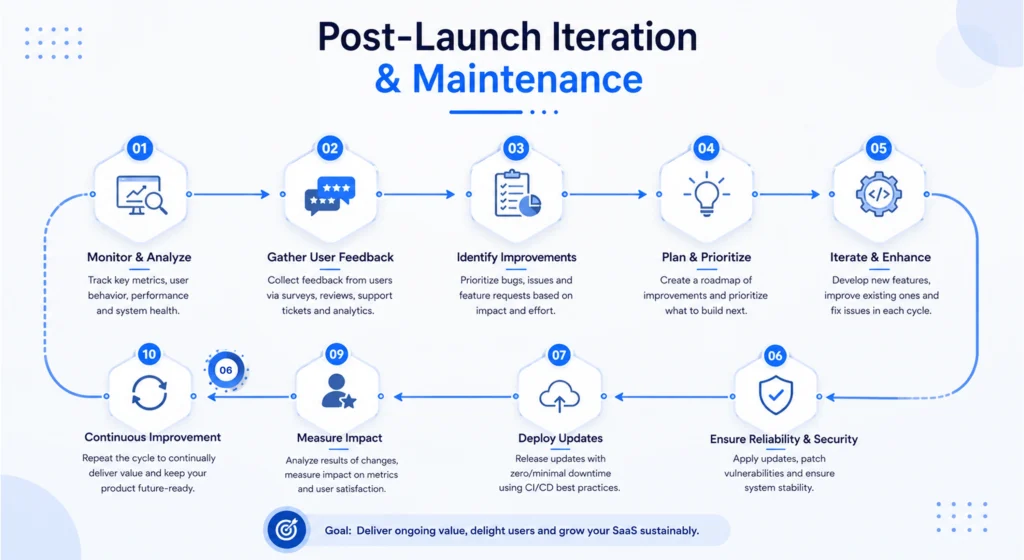
Launching your SaaS product is just the beginning. Long-term success comes from continuously improving the product based on real user behavior, customer feedback, and changing market demands.
Use analytics platforms like Mixpanel and Amplitude to understand how users interact with your application.
Track feature adoption, user drop-offs, retention, and conversion funnels to identify friction points and prioritize updates that deliver the greatest business impact.
Performance and reliability should evolve alongside your product. Regularly optimize APIs, databases, caching strategies, and CDN delivery to ensure a fast and consistent user experience as your user base grows.
Finally, automate where possible. Implement continuous deployment, automated code rollbacks, graceful error handling, and proactive monitoring to release updates with confidence.
The most successful SaaS companies treat post-launch maintenance as an ongoing growth strategy, not just a support function.
Conclusion
The SaaS development process doesn’t end at launch; it evolves with every user interaction, feature update, and market shift.
The most successful SaaS products are built through continuous validation, iteration, and improvement.
By following a structured development process, from idea validation and MVP development to launch and ongoing optimization, you reduce risk, accelerate product-market fit, and build a scalable foundation for long-term growth.
In SaaS, success isn’t about releasing a perfect product; it’s about continuously delivering value and evolving with your customers.
Whether you build with an internal team or partner with experienced SaaS development services, the principles of this process stay the same: validate first, architect for scale, and improve continuously.
Frequently Asked Questions
What is the SaaS development process?
The SaaS development process is a structured approach to building cloud-based software that covers market validation, product strategy, UX/UI design, architecture, MVP development, launch, and continuous improvement.
How long does it take to build a SaaS MVP?
A typical SaaS MVP development project takes 8–14 weeks, depending on the product’s complexity, feature set, and the development team’s experience.
How do I choose the right SaaS tech stack?
When choosing a SaaS tech stack, consider factors such as scalability, security, development speed, integration requirements, and long-term maintenance. Popular choices include React or Next.js for the frontend, Node.js or FastAPI for the backend, and PostgreSQL for the database.
What are the best SaaS architecture practices?
Some of the most important SaaS architecture best practices include adopting a multi-tenant cloud architecture where appropriate, designing API-first systems, implementing robust security measures, and using scalable cloud infrastructure.
Why is MVP development important for SaaS products?
A SaaS MVP helps validate product-market fit by launching the core functionality first. This approach reduces development costs, gathers real user feedback, and minimizes the risk of building features customers don’t need.
What is a SaaS go-to-market (GTM) strategy?
A SaaS go-to-market strategy is a plan for launching and growing your product. It typically includes market positioning, pricing, customer acquisition channels, beta testing, product launch, and post-launch growth initiatives.
Should I hire a SaaS development company or build an in-house team?
The right choice depends on your budget, timeline, and technical expertise. Professional SaaS development services can accelerate product delivery by providing experienced engineers, proven development processes, and scalable cloud solutions. At the same time, an in-house team offers greater long-term control over product development.