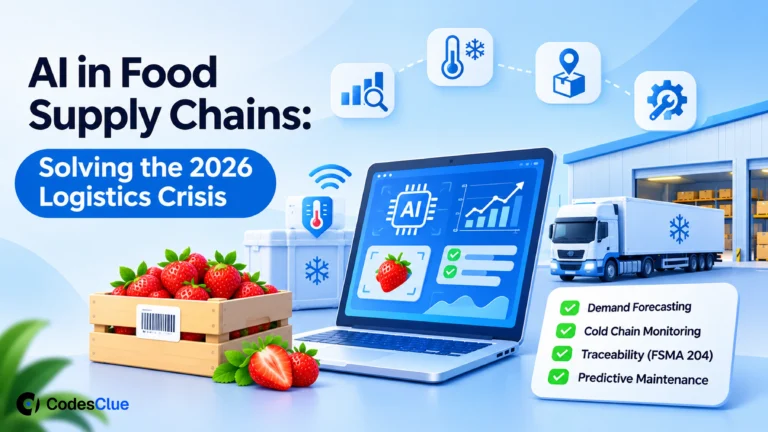

AI in Retail: Personalized Shopping and Smart Inventory Management
AI in retail, explained: personal shopping, stock-aware recommendations, AI inventory management, why pilots stall and a 5-step launch plan.
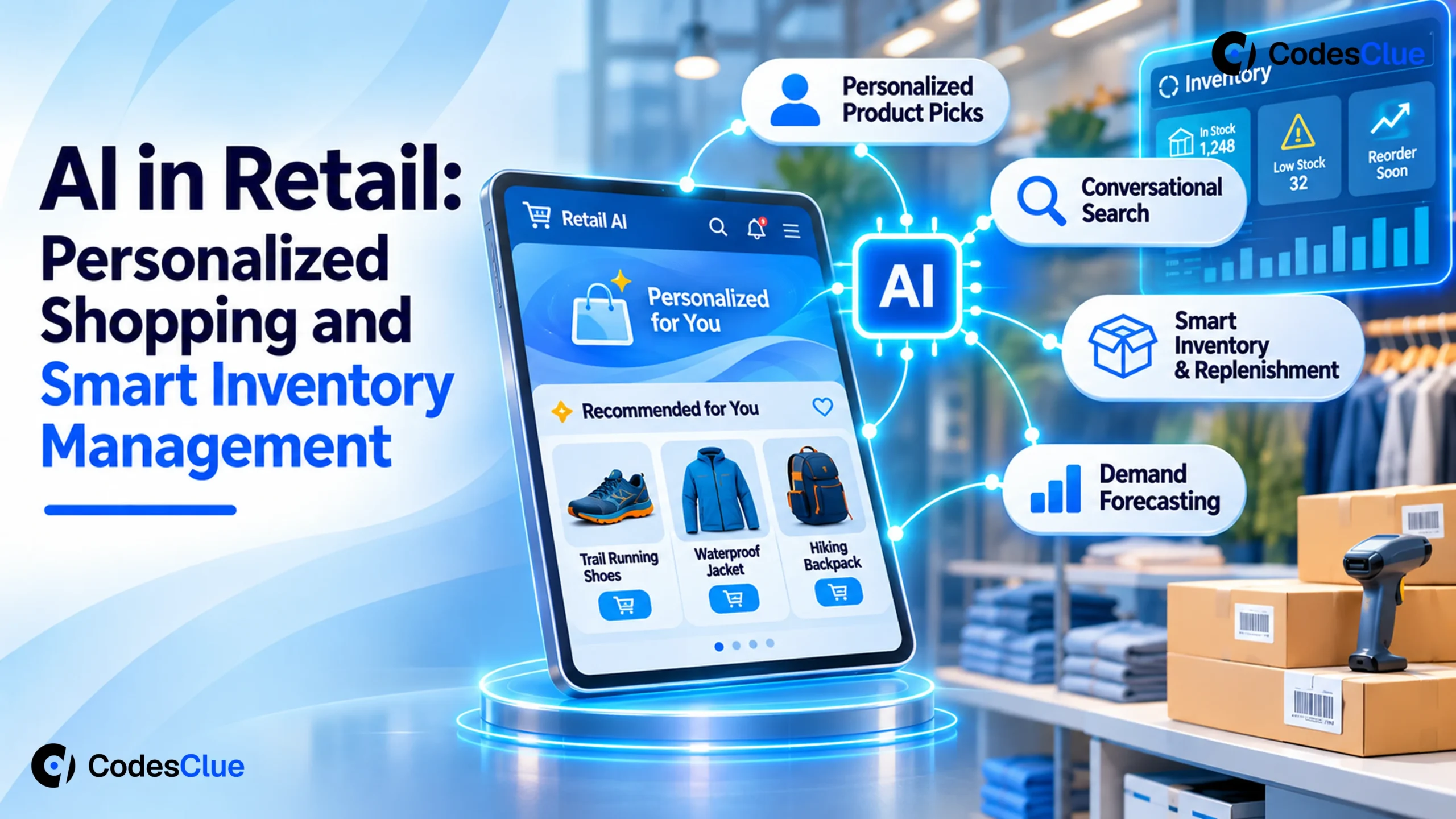
It is late at night, and a shopper drops trail running shoes into her cart. Your site offers her a leather belt. Her size sits in a warehouse two states away, and the store near her sold out last week.
Both problems have the same cause: your store does not know her, and it does not know its own shelves. AI in retail fixes the two together. This guide shows where AI pays off in shopping and in stock. You will also see why most pilots stall and how to launch one against a single clear number.
Key Takeaways
- AI can tailor search, product picks and cart extras to each shopper while they browse.
- The shopper signals that drive those picks also predict demand, so one data layer can serve both jobs.
- A recommendation that ignores live stock lets shoppers down. Connect stock before you personalize anything.
- Pilots usually stall on messy product data and split teams, not on the model.
- Pick one use case and one metric, test it for six to eight weeks, then grow.
What is AI in retail, and where does it work?
AI in retail means using machine learning and generative AI to decide what each shopper sees and what each store stocks. It reads live signals such as searches, carts, weather, promotions and stock levels. Then it ranks products, writes copy, answers questions and drafts orders. Rules and people still approve prices and large purchases.
Older tools ran on fixed rules and monthly spreadsheets. A rule like “show socks with shoes” treats every buyer the same. Modern AI retail solutions react within minutes and explain their choices in plain words.
Generative AI use cases in retail, grouped by team
Beyond ranking, generative AI in retail writes, answers and summarizes. Here are the most practical generative AI use cases in retail, grouped by the team that owns them.
| Team | What AI does | Number to watch |
|---|---|---|
| Ecommerce | Conversational search, personal product picks, cart extras | Conversion rate, average order value |
| Merchandising | Product descriptions, size and fit guidance from your own specs | Return rate |
| Planning | Store and SKU forecasts, draft purchase orders | Stockout rate, markdowns |
| Store operations | Daily task lists, staff questions, supplier emails | Hours saved per store each week |
Pro tip: Choose the row your team already measures well. A pilot without a trusted baseline turns into an argument instead of a decision.
Why AI in the retail industry matters now
The gap between promise and practice is still wide in AI in the retail industry. That gap is good news for a midsize brand that moves first.
| What the research shows | Figure | Source |
|---|---|---|
| Value generative AI could add for retailers | $240B to $390B | McKinsey, August 2024 (opens in a new tab) |
| Fortune 500 retail executives who had scaled gen AI across the company | 2 of 52 | McKinsey survey, April 2024 (opens in a new tab) |
| Yearly cost of out-of-stocks and overstocks worldwide | $1.7 trillion, 6.2% of global retail sales | IHL Group, 2026 (opens in a new tab) |
| Consumers who expect companies to personalize their experience | 71% | McKinsey, 2021 (opens in a new tab) |
Read the table as one story. Shoppers want personal service, empty shelves and markdowns eat margin, and almost no large retailer has scaled a fix. McKinsey points to data quality, privacy worries, thin expertise and cost as the brakes.
AI in personalized shopping: from search box to checkout
Done well, AI in personalized shopping turns one storefront into a different store for every visitor. Three places make the biggest difference.
Search that understands how shoppers talk
With conversational AI in retail, shoppers type the way they talk. Picture “waterproof hiking boots under $150 for wide feet.” Keyword search breaks on a query like that. A language model reads it, filters your catalog and says why each pair made the list.
The same assistant can track orders and start returns. Your support team then spends its time on the hard cases.
The AI personal shopping assistant
An AI personal shopping assistant works like your best floor associate on a night shift. It remembers past orders, asks one good follow-up question and compares two products side by side. Good assistants keep three rules:
- Stay grounded. Show only real products, real prices and real stock from your systems.
- Hand off early. Pass high-value or tricky requests to a person, with the chat attached.
- Explain the pick. “Because you bought the trail runners” earns more trust than a silent list.
Personalized shopping cart suggestions AI
Cart extras carry margin, yet generic “you may also like” strips get ignored. Personalized shopping cart suggestions AI looks at the whole basket, the shopper’s history and stock near her. It offers running socks that match the shoes, and it skips anything she cannot get this week.
Pro tip: Filter out items below a safety stock level before the model ranks anything. Then check stock again at checkout, so a suggestion never turns into a cancelled order.
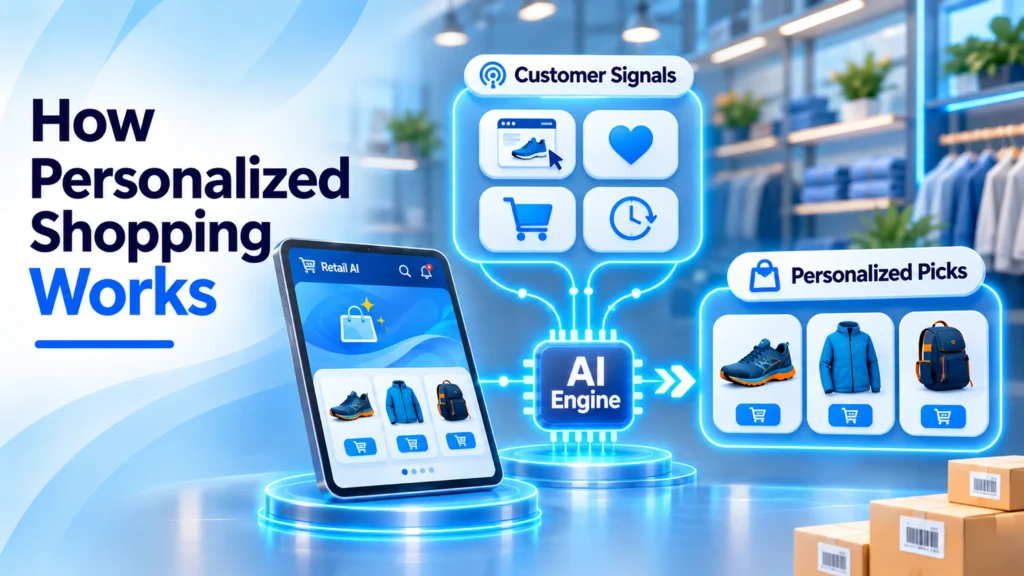
Planning a retail AI project? Tell us what you sell and where your data lives. One of our engineers will reply within one business day with a suggested first step.
AI inventory management: stock what shoppers will buy
Personal picks mean little if the item is gone. AI inventory management predicts demand for each SKU in each store, then suggests what to order, move or mark down. Planners stop building every forecast by hand. They review the few lines the model flags.
How AI for inventory management compares with spreadsheets
| Factor | Spreadsheet planning | AI planning |
|---|---|---|
| Forecast level | Category, monthly | SKU and store, daily |
| Signals used | Last year’s history | Sales, weather, promotions, local events, search trends |
| Reaction time | Weeks | Hours |
| Markdown timing | Fixed calendar | When sell-through slows |
| Planner’s job | Builds the forecast | Approves exceptions |
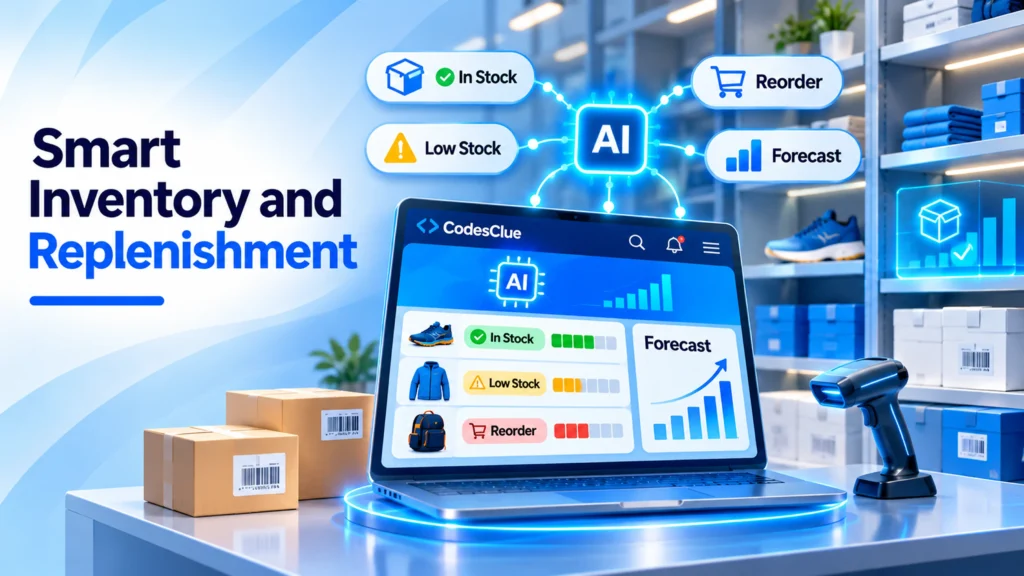
Teams that switch to AI for inventory management usually start with their fastest-moving categories. Seasonal lines need at least one full year of clean history before the model earns trust.
Generative AI inventory management for store managers
On top of the forecast, generative AI inventory management adds a plain-language layer. A store manager asks, “Why are we short on size 9?” The answer names the cause, such as a late truck or a fast-selling promotion. Then it suggests a transfer.
The model can also draft purchase orders and supplier emails for a planner to approve.
Supply chain links and store automation
Here, AI in retail supply chain work links forecasts to warehouses, carriers and suppliers. It spots a delayed shipment early, moves stock from a slower store and hides an item online before shoppers see an empty shelf. We cover the transport side in our guide to AI in logistics. Grocers and fresh-food brands also deal with expiry dates and cold storage, which we cover in our food supply chain AI guide.
Retail automation AI handles the repetitive tasks in between. Think price and label updates, shelf-gap alerts from store cameras and small replenishment orders under a set limit. Anything above that limit still goes to a person.
Pro tip: Set the approval limit low for the first month, then raise it as planners stop overriding the system. Override rates tell you more about trust than any accuracy score.
One data loop: why personalization and inventory belong together
Most retailers run these as two projects. Ecommerce buys a recommendation tool. Planning buys a forecasting tool. Neither one sees what the other knows.
The same signals feed both. A spike in searches for a boot is a buying signal today and a demand signal for next week. Let both teams read one shared layer of product, stock and shopper data. The store then recommends what it can ship and stocks what it is about to recommend.
A mini-scenario: one apparel brand, two outcomes
Picture a 40-store apparel brand with a busy online shop. In version one, the site promotes a rain jacket that is out of stock in most sizes. Shoppers click, find nothing and leave, while the forecast never learns about the extra interest.
In version two, the recommendation engine checks stock by size and location first. It promotes the jacket only where sizes exist and pushes a close alternative elsewhere. The extra searches flow into the forecast, so the next order covers the sizes people wanted.
Why retail AI pilots stall, and how to avoid it
Plenty of articles list what AI can do. Few explain why only 2 of 52 large retail executives had scaled it. In practice, pilots rarely fail on the model. They fail on the plumbing around it.
| Why pilots stall | Warning sign | The fix |
|---|---|---|
| Messy product data | One item has different IDs online, in store and in the warehouse | Clean and unify the catalog first |
| Split teams | Ecommerce personalizes, planning forecasts, nobody shares data | Run both from one shared data layer |
| No clear metric | The pilot still “looks promising” after six months | Name one number before you start |
| Made-up answers | The assistant quotes wrong prices or products you never sold | Ground every answer in live catalog and stock data |
| Low staff trust | Planners override almost every forecast | Show the reason behind each suggestion |
What we see in real projects
In our commerce builds, the slow part was keeping data in sync, not the clever features. For the Green Releaf dispensary platform, we connected the web store and mobile app to the store’s POS in real time. That kept inventory, prices and product details the same on every screen.
Any AI layer on top of a store needs that kind of single source of truth first.
We saw the same lesson on SmartPantryPal, a pantry app we built in Flutter. Its dashboard shows low-stock, expiring and expired items on one screen. People only trusted it once adding an item took a few taps, because an inventory that nobody updates soon stops matching the shelf.
Quick readiness checklist
Answer yes or no before you spend on a pilot:
- Every product has one ID across store, site and warehouse.
- You can see stock by location at least once a day.
- You have 12 months or more of clean sales history.
- One person owns the pilot and its metric.
- Shoppers can see and control how you use their data.
Four or five yes answers mean you can pilot. Fewer than four means data work comes first, and that work pays back on every later project.
Common mistakes to avoid
- Starting with three use cases. Search, cart picks and forecasting at once spread the team thin and blur the results.
- Personalizing before you connect stock. Shoppers forgive a plain page sooner than a promise you cannot keep.
- Letting the model set prices. Price changes need rules, audit trails and a human owner.
- Hiding the data you use. Guessed life events or income feel invasive. Stick to orders, saved preferences and browsing on your own site.
- Skipping the control group. Without an A/B test you cannot tell AI lift from a good season.
How to launch a retail AI pilot without the risk
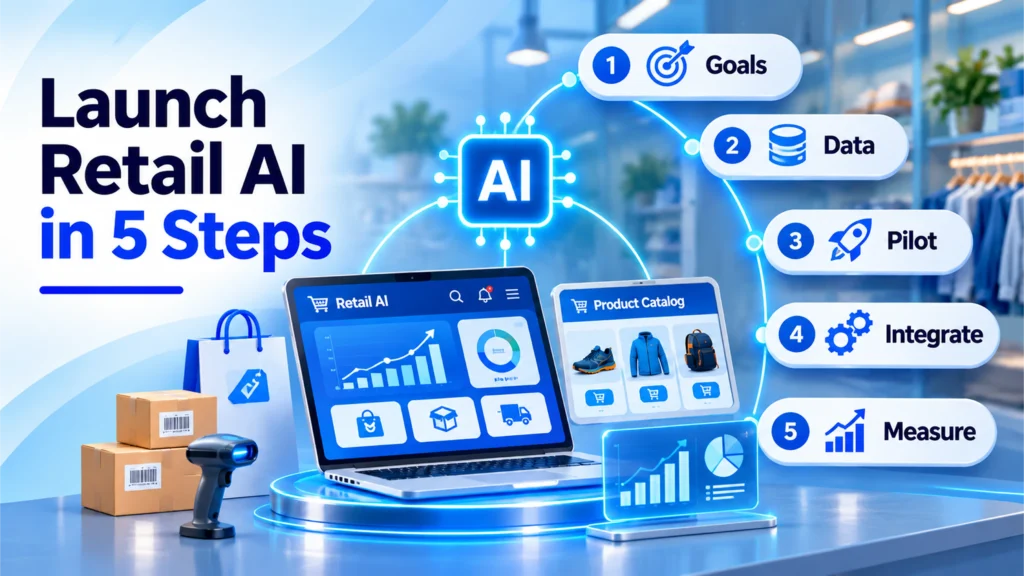
- Pick one use case. Choose conversational search, cart suggestions or store-level forecasting. Leave the other two for later.
- Set one metric. Conversion rate, average order value or stockout rate all work. Write down today’s number.
- Connect live data. Link the model to your catalog, prices and stock so it never guesses.
- Run an A/B test. Compare against your current setup for six to eight weeks.
- Scale what works. Add channels, then join personalization and inventory into one loop.
Marketplace app or custom build?
| Your situation | Better fit | Why |
|---|---|---|
| One online store on a standard platform, clean catalog | An app from your platform’s marketplace | Fast to try, low setup, good enough for a first test |
| Several channels, POS plus ecommerce, stock in more than one system | Custom layer over your own data | Marketplace apps rarely see store stock or your rules |
| Strict rules on pricing, age checks or product claims | Custom build with guardrails | You control what the model may say and do |
| Product data split across spreadsheets that disagree | Data cleanup first | Any AI tool will repeat the mess |
A custom route with us follows three steps. We start with a small proof of concept on one channel, then an MVP, then production once the numbers hold.
Budgets on our side run from $8K to $25K for an MVP, $25K to $70K for a mid-size build and from $70K for large platforms. A short discovery phase turns that into a written estimate for your stack.
Pro tip: Ask any vendor, us included, to show the fallback. What does the shopper see when the model is slow, wrong or offline? A good answer is a plain, working page.
When AI is the wrong call
We would not build a custom AI layer for a single shop with a small, steady catalog. Clear categories, good photos and a simple bestseller list will earn more for far less. The same goes for a brand whose product data lives in three systems that disagree. Fix that first, and every later project gets easier.
The bottom line on AI in retail
AI in retail pays off when it does two jobs at once. It shows each shopper the right product, and it makes sure that product is on the shelf. The brands that win will not have the fanciest model. They will have clean data, one clear metric and a team that trusts the suggestions.
Ready to test AI on your own catalog? Send three details through our contact form: your commerce platform and POS, a rough count of products and stores, and the single result that matters most right now, such as repeat orders, basket size or fewer stockouts.
One of our engineers writes back inside one business day with the first use case we would pilot, the data it needs from your systems and a cost band from the ladder above. As with the Green Releaf build, we check the stock data first.
Our ecommerce software development, AI development and generative AI pages cover the full scope. Prefer to grow your own team? Hire AI developers for your retail project, and development starts within 48 hours. For the data side, read our guide to predictive analytics in manufacturing and retail.
FAQs
What is the fastest AI win for a midsize retailer?
Conversational search or cart suggestions on your own website. Both run on data you already hold, such as the catalog, past orders and browsing. Neither needs new store hardware, and both show results in conversion or order value within one test cycle. Forecasting usually takes longer because it needs a full season of clean history first.
How much sales history does AI demand forecasting need?
Twelve months of clean, SKU-level sales covers one full seasonal cycle, so treat that as the minimum. Two years helps for fashion, gardening and other strongly seasonal lines. Consistent product IDs and accurate stock counts matter more than extra years of messy data, so fix those before adding history.
Can generative AI write product descriptions safely at scale?
Yes, when it pulls every fact from your product data and a person approves each new template. Block it from inventing materials, sizes, care instructions or health claims. Then spot-check a sample from every batch, and send any description with a missing spec back to the merchandising team instead of letting the model fill the gap.
Will an AI shopping assistant replace store associates?
No. It handles routine questions, order status and late-night shoppers. Associates still handle fitting, complex advice and your most loyal customers. The best setups pass the shopper to a person with the full conversation attached, so nobody has to repeat themselves and the associate starts with context.
What does a custom retail AI pilot cost?
Marketplace apps charge a subscription and suit a single online store. A custom pilot connected to your catalog, stock and commerce platform falls in our MVP range of $8K to $25K. Larger builds that join several channels into one data layer sit higher. A short discovery phase gives you a written estimate before you commit.