
How Much Does Mobile App Development Cost in 2026?
How much does it cost to build a mobile app in 2026? Get a full breakdown by complexity, platform, team type, and hidden expenses.
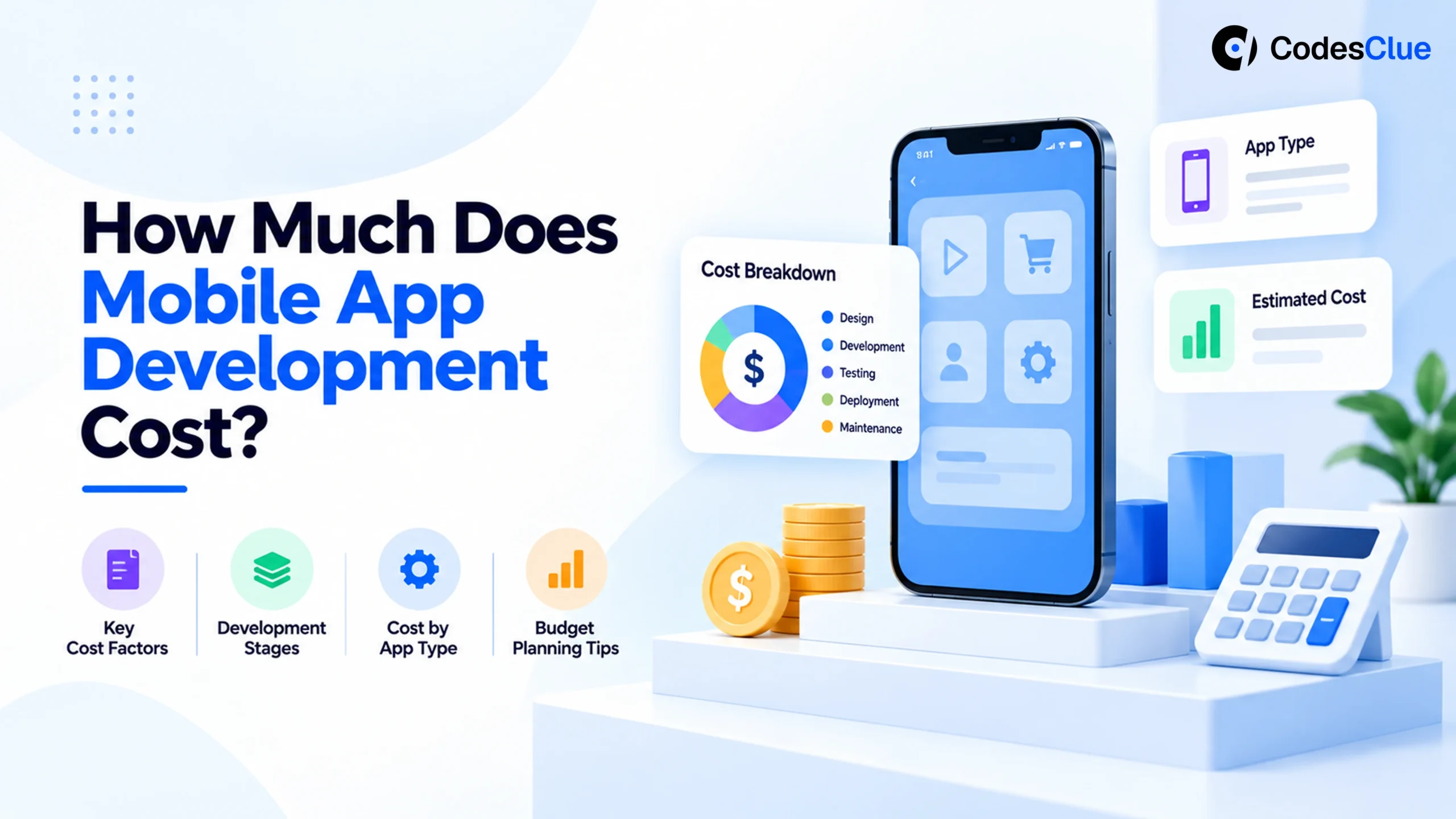
Most mobile apps cost between $10,000 and $300,000+ to build in 2026. A simple app with a few screens sits at the low end. An app with payments, real-time data or AI features sits in the middle. Enterprise apps with heavy integrations and compliance work sit at the top.
The range is wide because the price follows a few decisions you make early: what the app must do, which platforms it runs on, and who builds it. This guide walks through each part of the mobile app development cost, with typical market ranges, the costs most budgets miss, and what we charge at CodesClue.
What Factors Determine Mobile App Development Cost?
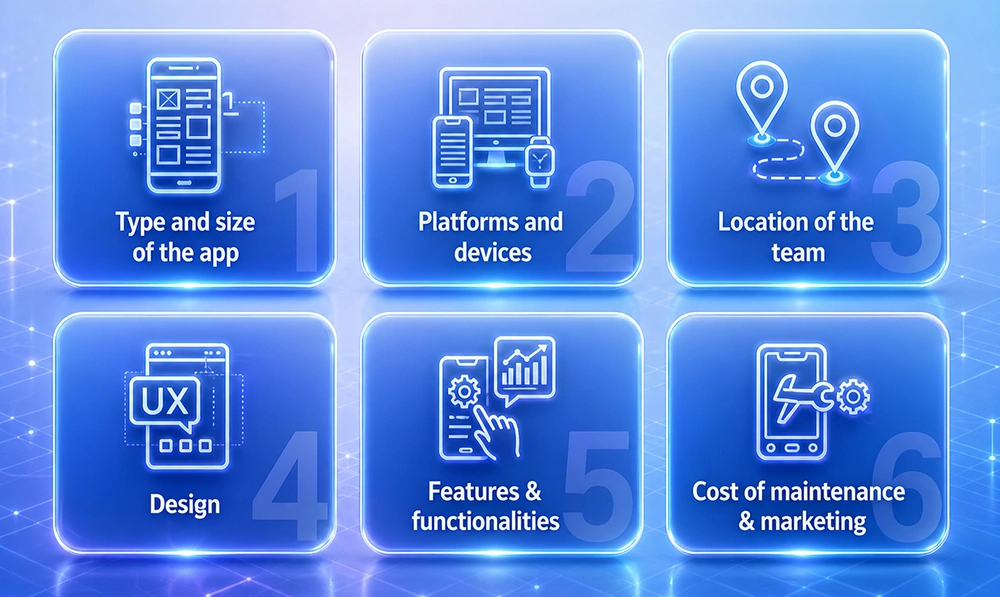
You have to plan a realistic budget for your mobile app and avoid unexpected or hidden expenses, then understanding the factors that influence mobile app development cost is essential. From the complexity of your app and the features you choose to the platform, tech stack, and development team you hire: every single decision directly impacts the final cost. By evaluating these elements early, businesses can prioritize what truly matters, optimize resources, and ensure a smoother development process without costly revisions or delays.
1. App Complexity
App complexity is the primary cost driver. The more complex your app, the more time, expertise, and resources it requires. Of course, higher complexity directly increases development hours and overall cost.
- Simple apps: Basic UI, limited functionality (e.g., calculators, static apps)
- Mid-level apps: APIs, dashboards, user accounts, moderate backend logic
- Complex apps: AI/ML features, real-time syncing, third-party integrations, high scalability
2. Features & Functionality
Every new feature adds to the scope of development scope and the budget. Common cost-driving features include user authentication, payment gateway integration, push notifications, real-time chat, GPS/location tracking, and AI/ML capabilities.
A feature-rich app (like ride-sharing or fintech apps) costs significantly more than a basic app with limited functionality. Streaming apps also carry a monthly bill for video delivery, which our OTT app development cost guide breaks down.
3. Platform Choice
iOS vs Android vs Cross-Platform:
Your platform decision impacts cost and development time, both. However, cross-platform app development can reduce duplication and speed up the process. If a browser-based app could cover your needs, our PWA vs native app guide compares both options.
- Native apps (iOS & Android separately): Higher cost due to separate codebases
- Cross-platform (Flutter, React Native): Lower cost by sharing a single codebase
- Single platform launch: More budget-friendly for MVPs
Building for iPhone only? Our iOS app development cost guide covers what an iOS-only app costs, including Apple’s fees.
4. Development Team Location
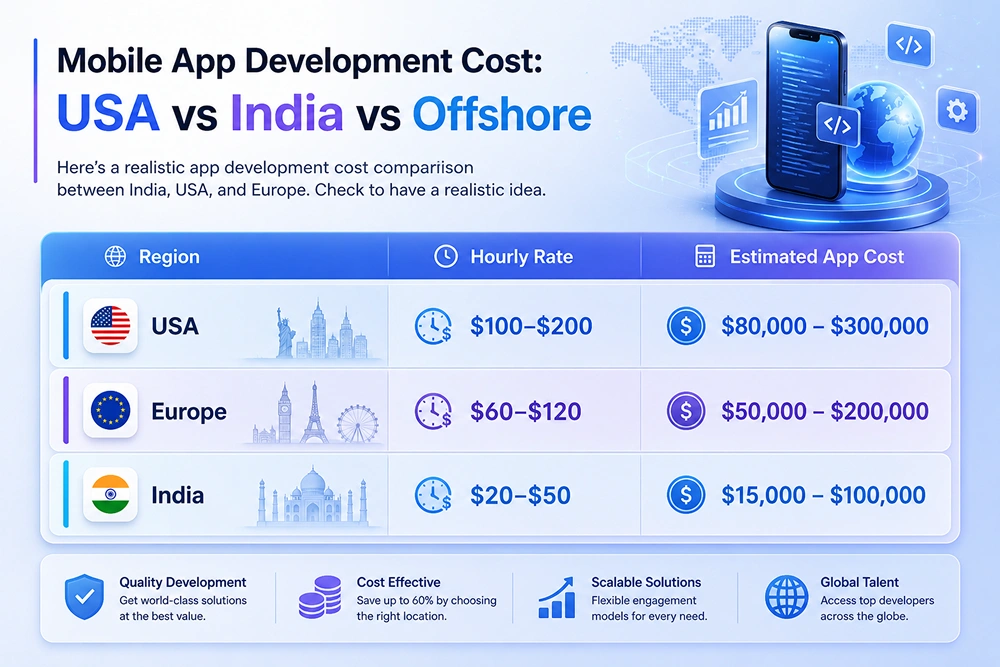
Hourly rates change a lot by region. These are typical agency rates you will see quoted in 2026:
- USA: $100 to $200/hour
- Europe: $60 to $120/hour
- India: $20 to $50/hour
A lower rate does not always mean a lower bill. A team that needs extra revision rounds, or shares no working hours with you, can cost more in the end. Compare teams on the same written scope, not on the hourly figure alone.
5. Tech Stack
The technologies you adopt for developing mobile applications for your customers affect scalability, performance, and cost of the apps. A modern, scalable tech stack may cost more upfront but saves money long-term.
- Native: Swift (iOS), Kotlin (Android)
- Cross-platform: Flutter, React Native
- Backend: Node.js, Python, Firebase
6. Engagement Model
Your company’s engagement model reflects the quality of the development team you have to bring impacting results. Always select the right model based on your project clarity and flexibility needs.
- Fixed price: Best for well-defined projects
- Dedicated team: Ideal for long-term, evolving apps
- Hourly model: Flexible but can increase costs if scope expands
Mobile App Development Cost by App Type & Complexity
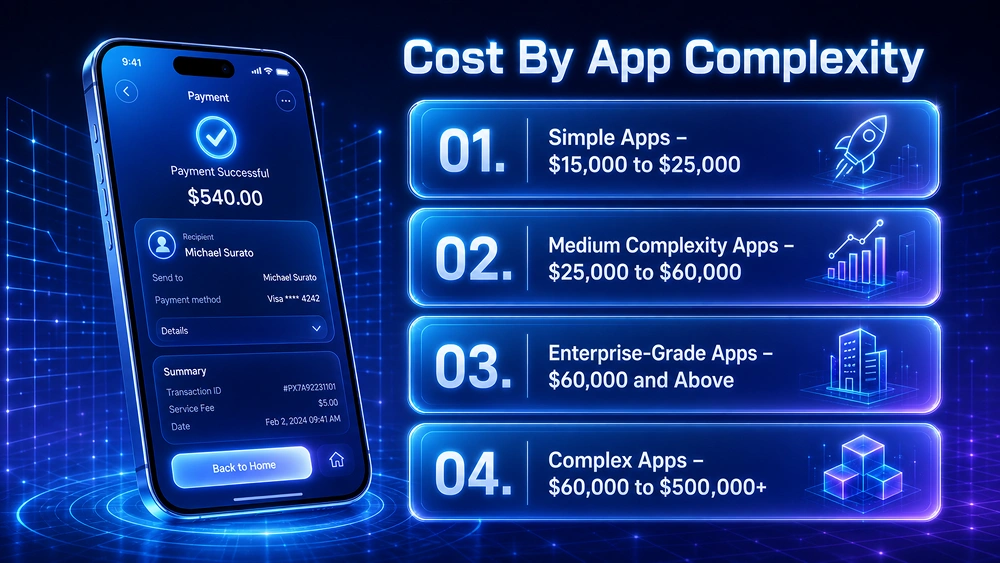
Confirm your app type and break down your mobile app costs. This will help you better align your budget with your business goals and technical requirements. Apps with different genres incur different development costs.
Simple App Cost:
It may cost approximately between $10,000 to $40,000. Simple apps are straightforward apps, with minimal logic and limited interactivity. They are quicker to develop and ideal for basic use cases or early-stage ideas. They are best suited for small businesses or proof-of-concept projects with tight budgets.
Features:
- Basic UI/UX design
- Static or limited dynamic content
- Simple forms or input fields
Examples:
- Calculator apps
- Informational or brochure-style apps
Mid-Level App Cost:
It may cost between $40,000 to $120,000 and offer more functionality and user interaction, requiring backend integration and structured data handling. It is best for startups looking to launch a functional product with meaningful user engagement.
Features:
- User authentication (login/signup)
- API integrations
- Admin dashboard and user management
Examples:
- Fitness tracking apps
- Basic food delivery apps
Complex / Enterprise App Cost:
These highly sophisticated apps cost between $120,000 to $300,000+. They are specifically designed for scalability, performance, and advanced user experiences. Costs for this range can increase based on scale, integrations, and compliance requirements.
Features:
- Real-time data syncing
- AI/ML capabilities
- Advanced security protocols
- Scalable cloud architecture
Examples:
- Ride-sharing apps like Uber
- Fintech platforms
- Enterprise SaaS applications
MVP App Development Cost:
It estimates between $15,000 to $60,000 to develop an MVP and validate your idea in the market.
iOS vs Android vs Cross-Platform App Development Cost
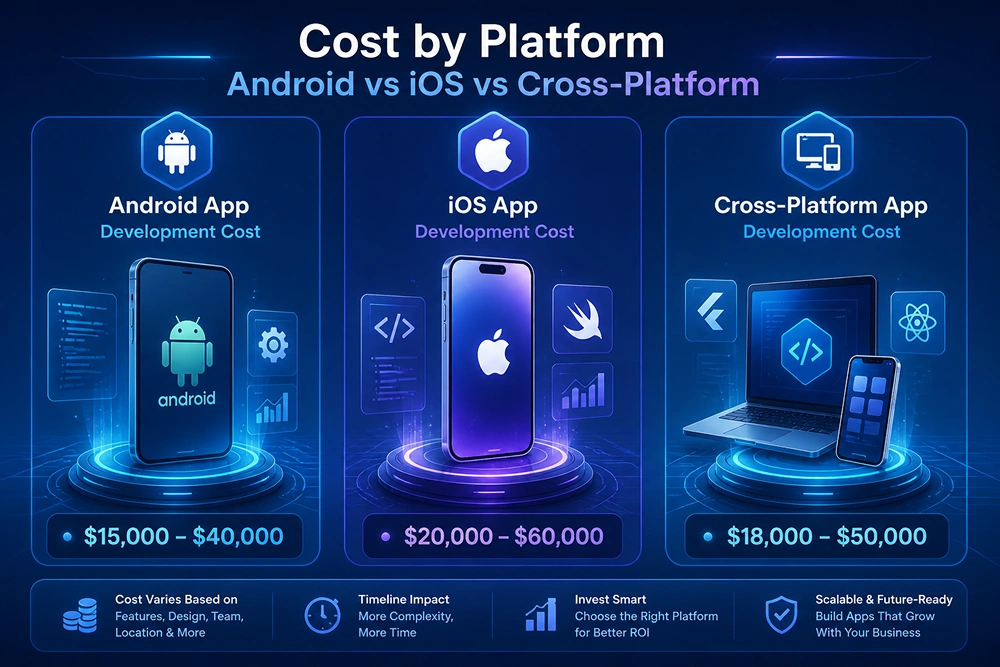
Your choice between native and cross-platform development plays a major role in determining overall cost, performance, and scalability.
Native App Development Cost
- iOS app: $40,000 to $150,000
- Android app: $40,000 to $150,000
Native apps are developed specifically for a single platform using dedicated technologies, either for iOS or Android, which ensures a highly optimized and seamless user experience.
These apps offer superior performance and speed, high security and stability, and full access to device-specific features. Whereas, the loopholes they come with are higher cost due to separate development for iOS and Android and increased development time and maintenance effort.
Still, native platforms like iOS and Android are the best platforms for app development requiring high performance, advanced features, or premium user experience.
Cross-Platform App Development Cost
- Flutter App Development Cost: $25,000 to $120,000
- React Native App Development Cost: $30,000 to $130,000
Cross-platform app development frameworks allow developers to write a single codebase for all types of apps as the framework works across both iOS and Android, making development faster and more cost-efficient.
These apps come with a single codebase that reduces duplication, faster development and quicker launch, and lower overall cost compared to native. The loopholes include slight performance limitations in highly complex or graphics-heavy apps and they may require native modules for advanced functionalities.
Cross-platform apps are ideal for startups and businesses looking to launch quickly while keeping costs under control.
What is Cheaper: Flutter or Native?
Generally, Flutter is 30 to 40% cheaper than native development. The reason is, Flutter uses a single codebase for both iOS and Android, which reduces development time, team size, and maintenance costs. Therefore, instead of building two separate apps, you are essentially building one that works across different platforms.
But, native development still has an edge when it comes to highly complex applications, such as advanced gaming apps, real-time systems, or heavy AI/ML integrations. In these cases, native apps offer better performance, deeper hardware access, and more flexibility.
In short, you can choose Flutter for cost-efficiency, faster launches, and MVPs, and go with Native for developing performance-heavy, feature-rich, and large-scale apps.
Mobile App Development Cost: USA vs India vs Offshore
Here’s a realistic app development cost comparison between India, USA, and Europe. Check to have a realistic idea.
Offshore vs Onshore App Development Cost
Whatever business you own, choosing between onshore and offshore development can significantly impact your overall budget and project efficiency.
Onshore App Development:
Onshore development teams are located in the same country as your business, making collaboration more seamless.
It eases and simplifies the communication and real-time collaboration, makes better cultural and time-zone alignment, and helps with simplifying project management. On the other hand, onshore development significantly incurs higher development costs.
Offshore Development:
Offshore teams work from another country, often with lower hourly rates and a large pool of experienced engineers. The team can also grow or shrink with the project. The trade-off is distance: fewer shared working hours, and a greater need for clear specs, weekly demos and a named project lead. Thinking about an offshore team? See how overlap hours, code ownership and onboarding work when you hire offshore developers through CodesClue.
How to Compare App Quotes From Different Teams
Two quotes for the same app idea can look very different. Before you compare the totals, check that each one prices the same work:
- The same feature list, written down screen by screen
- Design, QA testing and app store release, not only coding
- Who owns the code, the cloud account and the store listings at the end
- How many hours a day the team overlaps with yours
- Milestones you can test, with payment tied to each one
- Bug fixes and support in the first months after launch
A quote that leaves out testing or release work only looks lower. That cost comes back later, usually at a worse time.
What’s Included in the Total Cost of Mobile App Development?
Your complete mobile app budget is not just about coding, it covers multiple stages and components that ensure your app is functional, scalable, and user-friendly.
1. UI/UX Design:
It decides your app’s look and user experience after being crafted. It lays the foundation for usability and engagement covering wireframes (basic layout structure), interactive prototypes, and user journeys and flow mapping. Design costing between $5,000 to $25,000 helps in reducing costly redesigns later.
2. Frontend & Backend Development:
It shows the core development phase where your app is actually built. It covers frontend depicting what users see and interact with and backend managing server, business logic, database management. Costing between $20,000 to $150,000+ justifies due to app complexity and features.
3. APIs & Integrations:
They are third-party services on which most modern apps rely to extend their functionality. The integrations include payment gateways, social media logins, and external APIs (maps, analytics, etc.).
More integrations = higher development and maintenance cost.
4. QA Testing:
It ensures your app runs smoothly across devices and scenarios. Quality is controlled through functional testing, performance testing, and security testing. The cost charged is typically 15 to 25% of the total development budget. But remember, skipping proper testing can lead to expensive fixes post-launch.
5. Cloud Infrastructure:
Cloud infrastructure supports your app’s backend operations and scalability on platforms like AWS, Firebase, Azure, and hosting, storage, and server scaling. Here the costs are ongoing and depend on user traffic and app usage.
6. App Store Fees:
App store fees are charged as small but essential costs to publish your app publicly on major platforms.
- Apple App Store: $99/year
- Google Play Store: $25 (one-time)
Hidden Costs in Mobile App Development
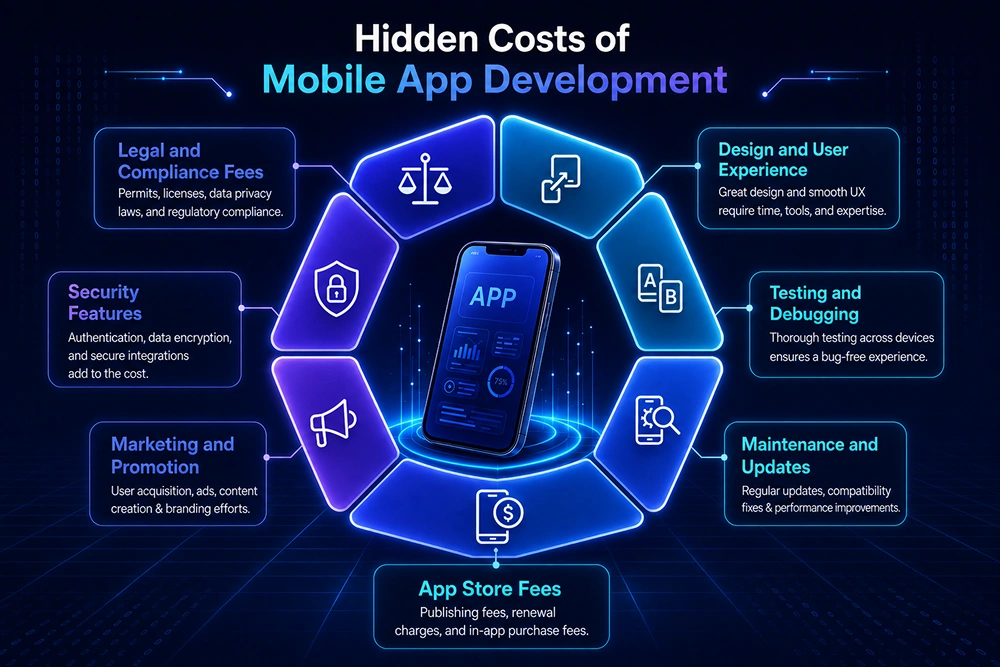
Other than the chargeable expenses, there are several “hidden” costs that can quietly increase your total budget if not planned in advance.
- Feature Creep: As the project progresses, new ideas and features often get added. While they may improve the app, they also increase development time, complexity, and cost.
- Third-Party Subscriptions: Many apps rely on external tools and services such as payment gateways, analytics platforms, APIs, or cloud services. These often come with monthly or usage-based fees that add up over time.
- Scaling Costs: As your user base grows, your app will require more server resources, storage, and performance optimization. Higher traffic will lead to higher infrastructure and maintenance costs.
- Security & Compliance: Apps handling sensitive data (like fintech or healthcare) must comply with strict regulations and security standards. Implementing encryption, compliance protocols, and regular audits can increase both development and ongoing costs.
These are some hidden factors that can increase your total mobile app development cost by 10 to 20%, making it crucial to account for them during initial planning to avoid budget overruns later.
Post-Launch App Maintenance Cost & Ongoing Expenses
When talking about the cost, launching your app is just the starting point, but to keep it functional, secure, and competitive requires continuous investment. Let’s check out some post-launch costs associated with mobile application development.
App Maintenance Cost Per Year
It typically comprises 15 to 25% of the initial development cost. For example, a $50,000 app may cost around $7,500 to $12,500 per year to maintain. This ensures your app stays updated, secure, and performs smoothly over time.
Ongoing Costs Include:
- Bug Fixes: Comprises resolving issues that arise after launch
- Updates (OS Compatibility): Adapting to new iOS and Android versions
- Server Costs: Hosting, storage, and scaling infrastructure
- Performance Optimization: Improving speed and user experience
- Security Patches: Protecting user data and preventing breaches
Post-Launch Support
- Feature enhancements and new releases
- Improvements based on user feedback
- Analytics tracking and performance optimization
Note that regular updates help retain users and stay competitive in the market. If you ignore the maintenance requirements, it can lead to performance issues, security risks, and poor user experience, ultimately causing your app to lose users and fail over time.
What CodesClue Charges for a Mobile App
The prices above are typical market prices. Here is what a build with our mobile app development services team usually costs:
- MVP or simple app: $8,000 to $25,000
- Mid-size app with custom integrations: $25,000 to $70,000
- Large or enterprise app: from $70,000
Where your app lands depends on the same factors listed above: features, platforms, integrations and design. You get a written estimate with milestones before anything is signed. The engineers who build your app are based in Ahmedabad, and CodesClue also has offices in Germany and the USA. We start with the smallest version that proves the idea, then build the rest in short sprints you can see and test.
Tell us about your app and an engineer will reply within one business day.
Conclusion
There is no single price for an app. The mobile app development cost in 2026 follows its features, platforms, integrations and the team that builds it.
Start with an MVP, pick the platforms your users are on, and ask every team to price the same written scope. The breakdown above gives you that scope and the questions to ask before you sign.
FAQs on Mobile App Development Cost
How much does mobile app development cost in 2026?
Most mobile apps cost between $10,000 and $300,000+ in 2026, based on typical market prices. At CodesClue, an MVP or simple app usually costs $8,000 to $25,000, a mid-size app with custom integrations $25,000 to $70,000, and a large app starts from $70,000. The final price depends on features, platforms, integrations and design, and you get a written estimate before anything is signed.
What is a realistic budget for a startup mobile app?
Most startups spend $15,000 to $60,000 on a first MVP at market prices. That covers the core features, one or two platforms and enough backend to test the idea with real users. Keep the first version small, measure what users actually do, then fund the next features from what you learn.
Is cross-platform development cheaper than native apps?
Usually, yes. Flutter and React Native apps often cost 30 to 40% less than two separate native apps, because one codebase serves both iOS and Android. Native still wins for heavy graphics, real-time systems or deep hardware access, where the extra spend buys performance you need.
What factors affect mobile app development cost the most?
Key factors affecting mobile app development cost include app complexity, features, platform choice, team location, and tech stack.
How much does it cost to maintain a mobile app?
Plan for 15 to 25% of the first build cost each year. For a $50,000 app, that means about $7,500 to $12,500 a year for OS updates, bug fixes, security patches, server costs and small improvements. Apps that skip this budget fall behind new iOS and Android releases quickly.
Is outsourcing mobile app development worth it?
It can be, when you choose the team on more than its rate. Offshore teams often have lower hourly rates, but the real cost depends on code quality, shared working hours and how clearly the work is scoped. Ask each team to price the same written feature list, and check who owns the code at the end.